

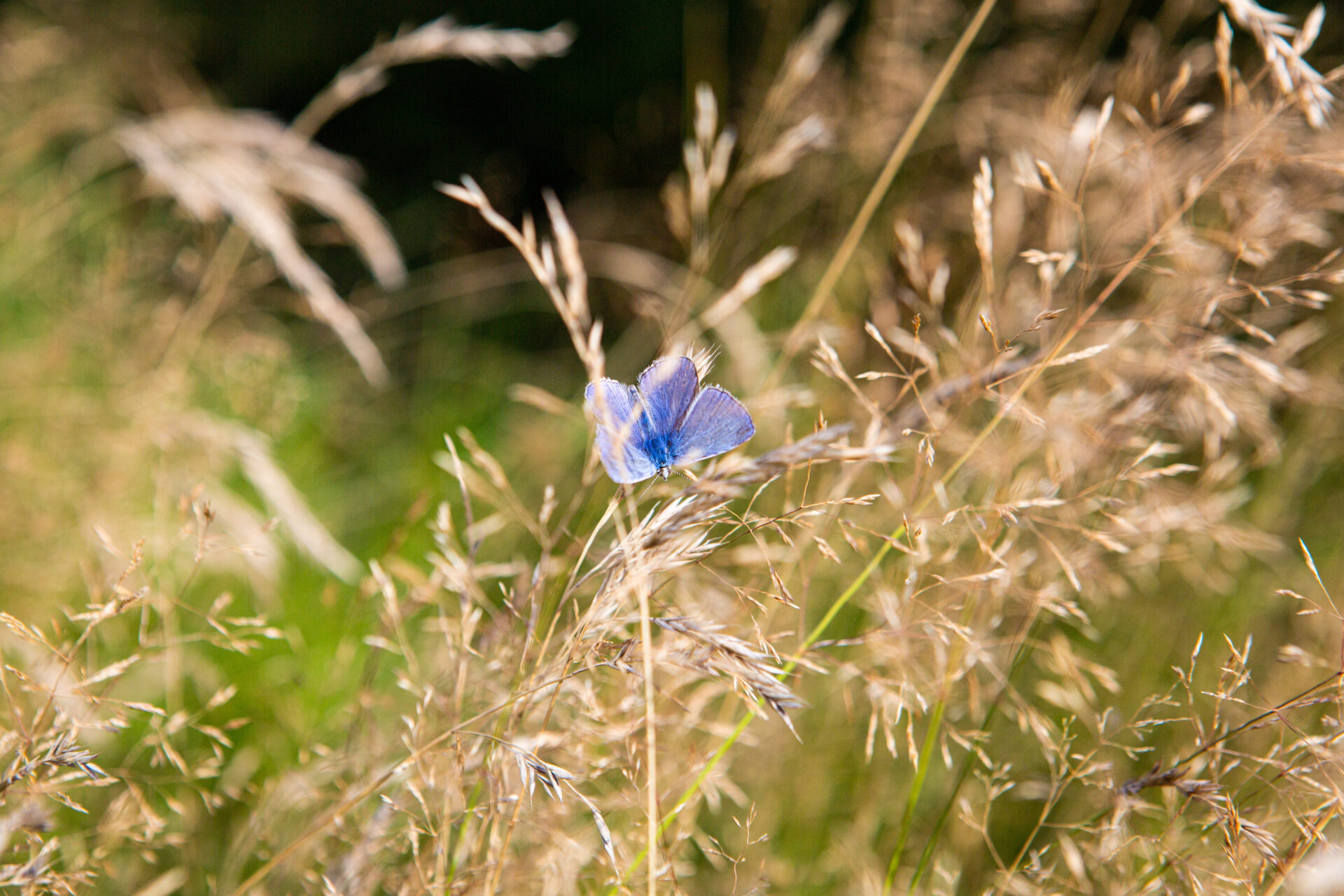
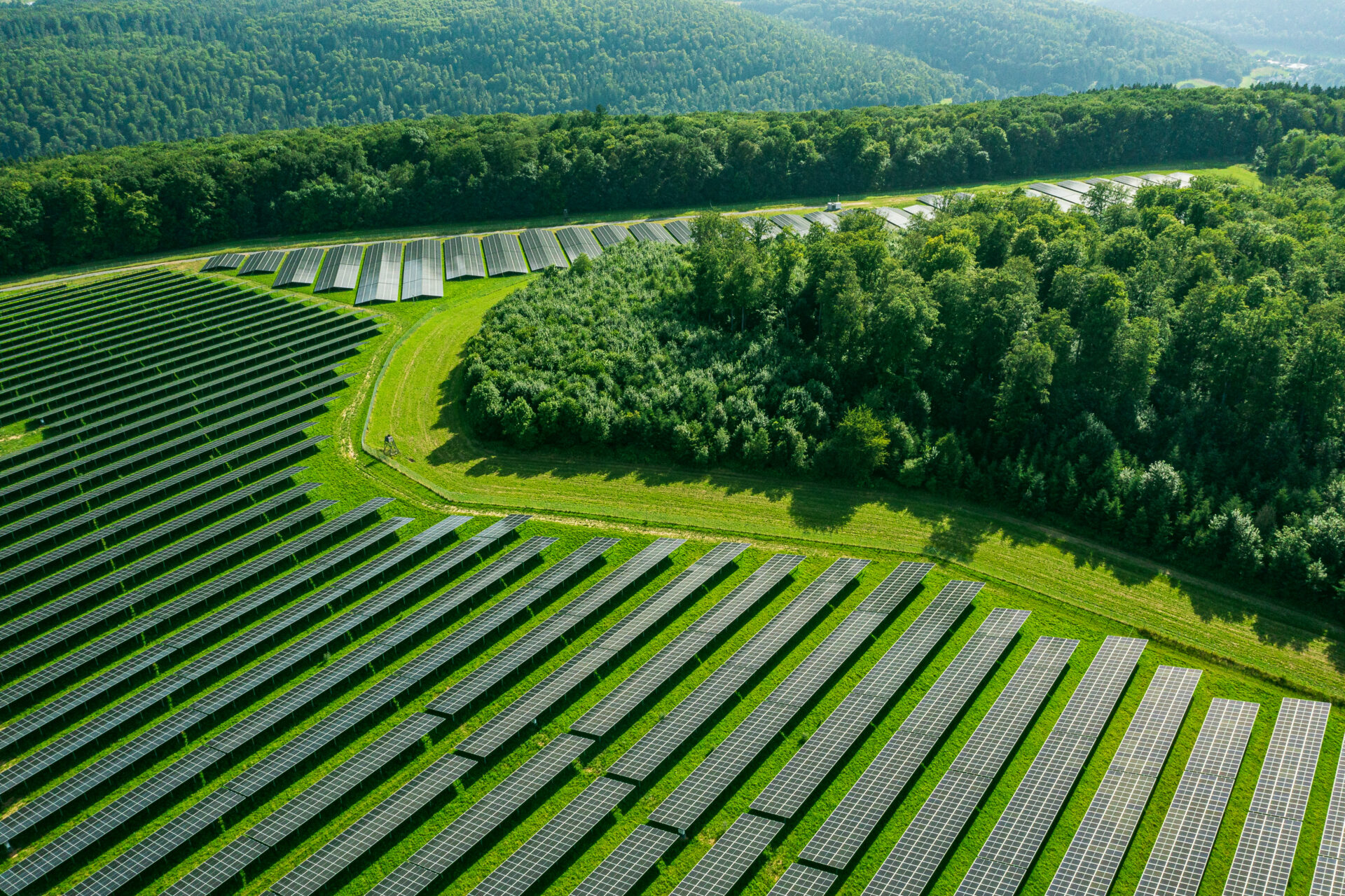
The study "Biodiversity in solar parks - a nationwide field study" shall Secure existing knowledge on species composition and occurrence in ground-mounted PV systems and to confront assertions with facts. To this end, as many species as possible that are relevant or representative of biodiversity were examined during the inspections at a total of 29 solar parks.
We are currently working on an English translation of the study restults. However, all details and results of the study in German can be found here:
Species groups analysed
Overall, the authors of the study, Dr Tim Peschel and Rolf Peschel, and the expert offices commissioned for the study eight species groups analysed: Plants, grasshoppers, butterflies, dragonflies, amphibians, reptiles, birds and bats. Other chance discoveries that the biologists noticed during their solar park inspections were also noted. These were often Mammals such as brown hares.
With this broad spectrum of study results for the species examined, from plants and insects to animals higher up the food chain, such as bats and birds, it was possible to show what diverse habitats are created in solar parks.
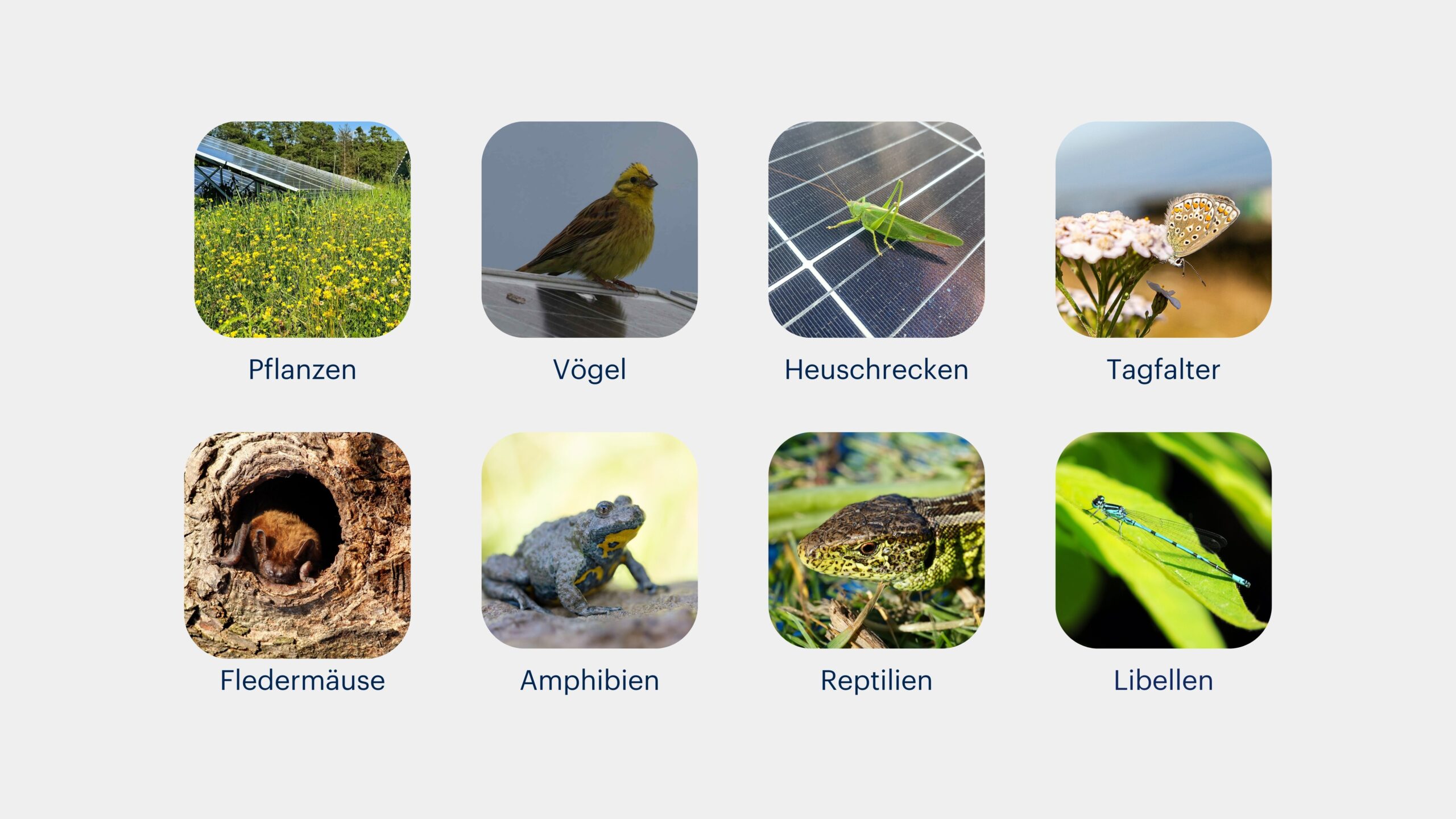
Info per species group:
Plants
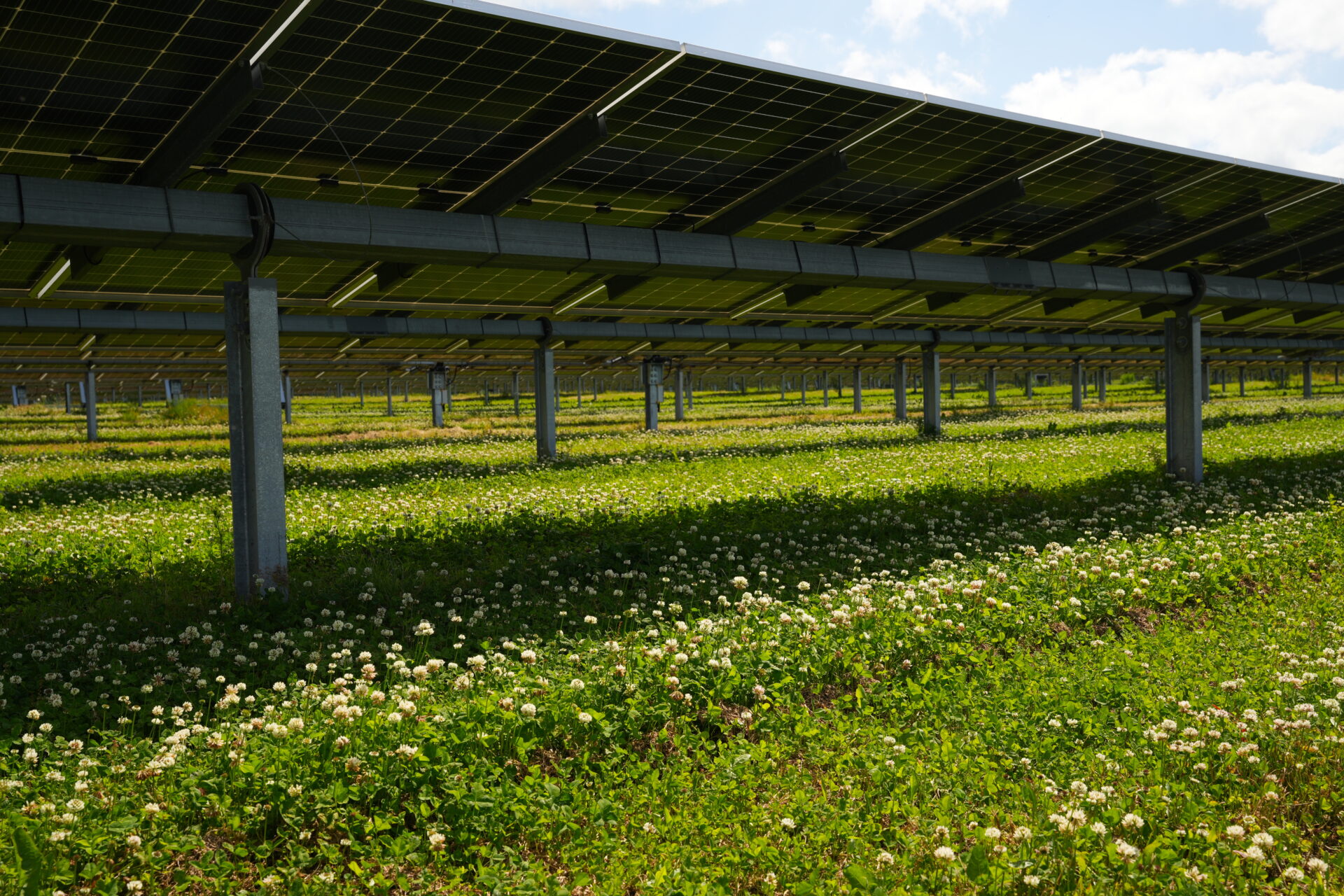
Place plants the basis for all other relevant animal species represent. Depending on the composition of the vegetation, certain butterfly species, for example, settle there or birds that breed on the ground decide to live there.
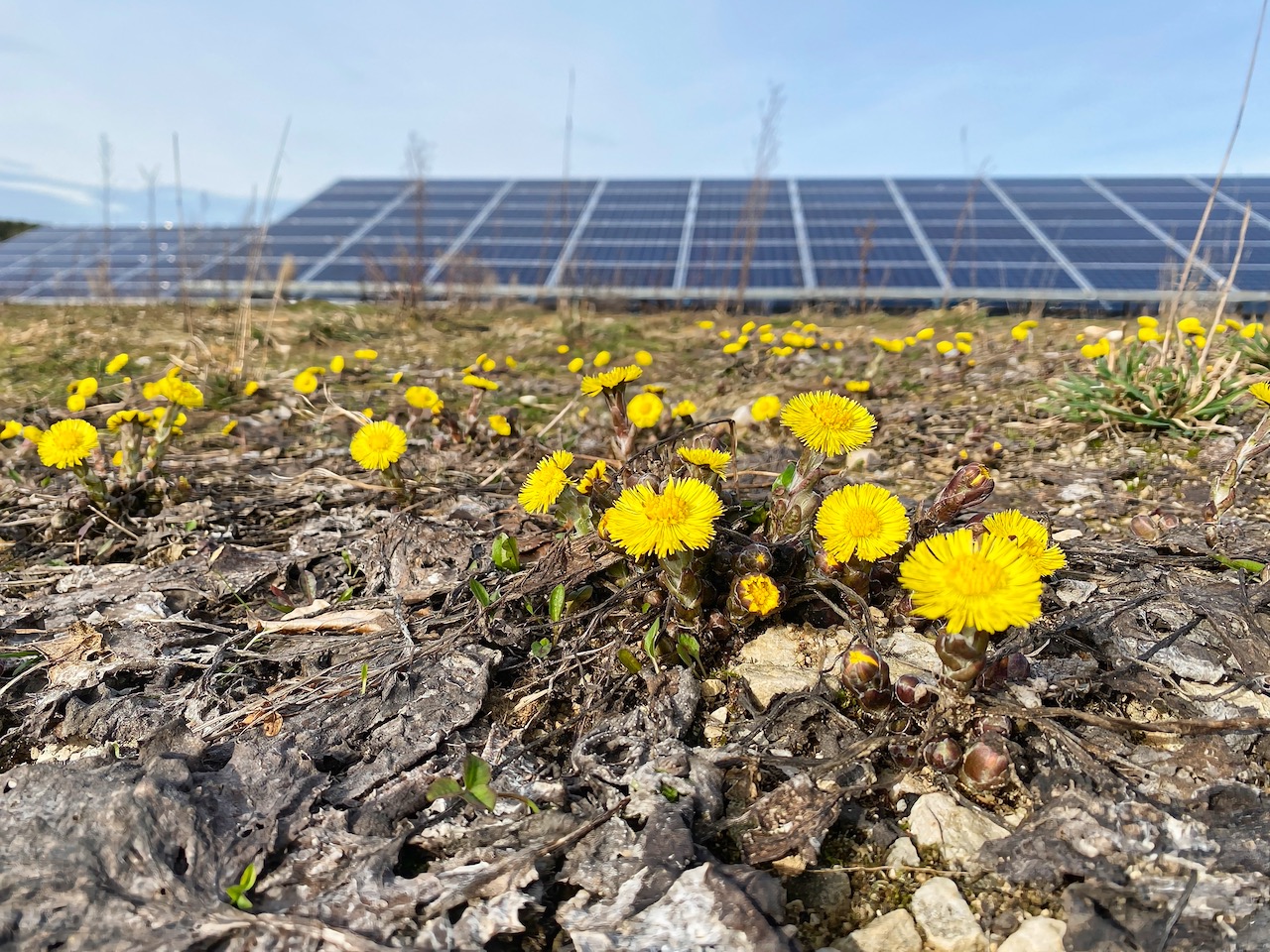
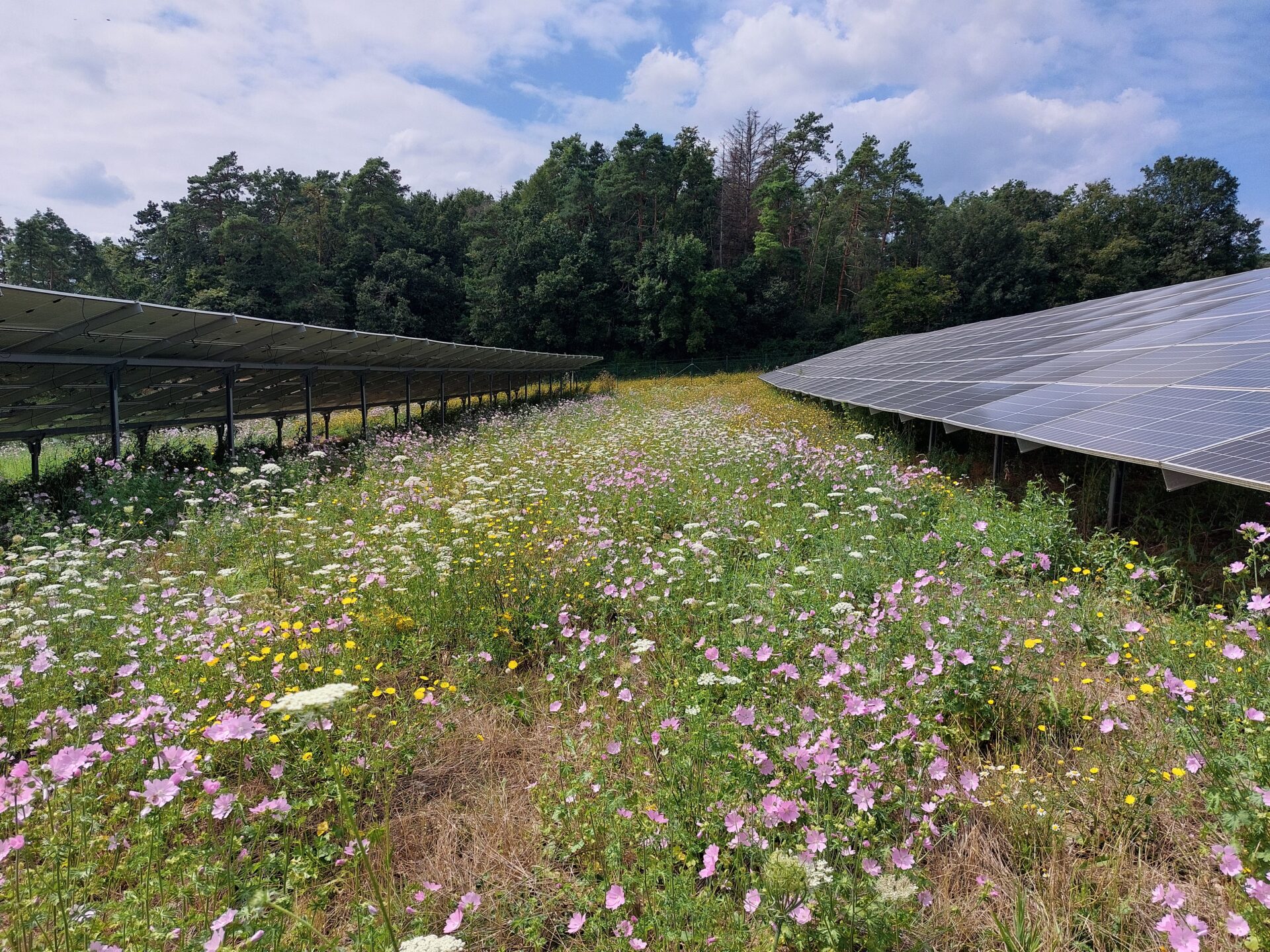
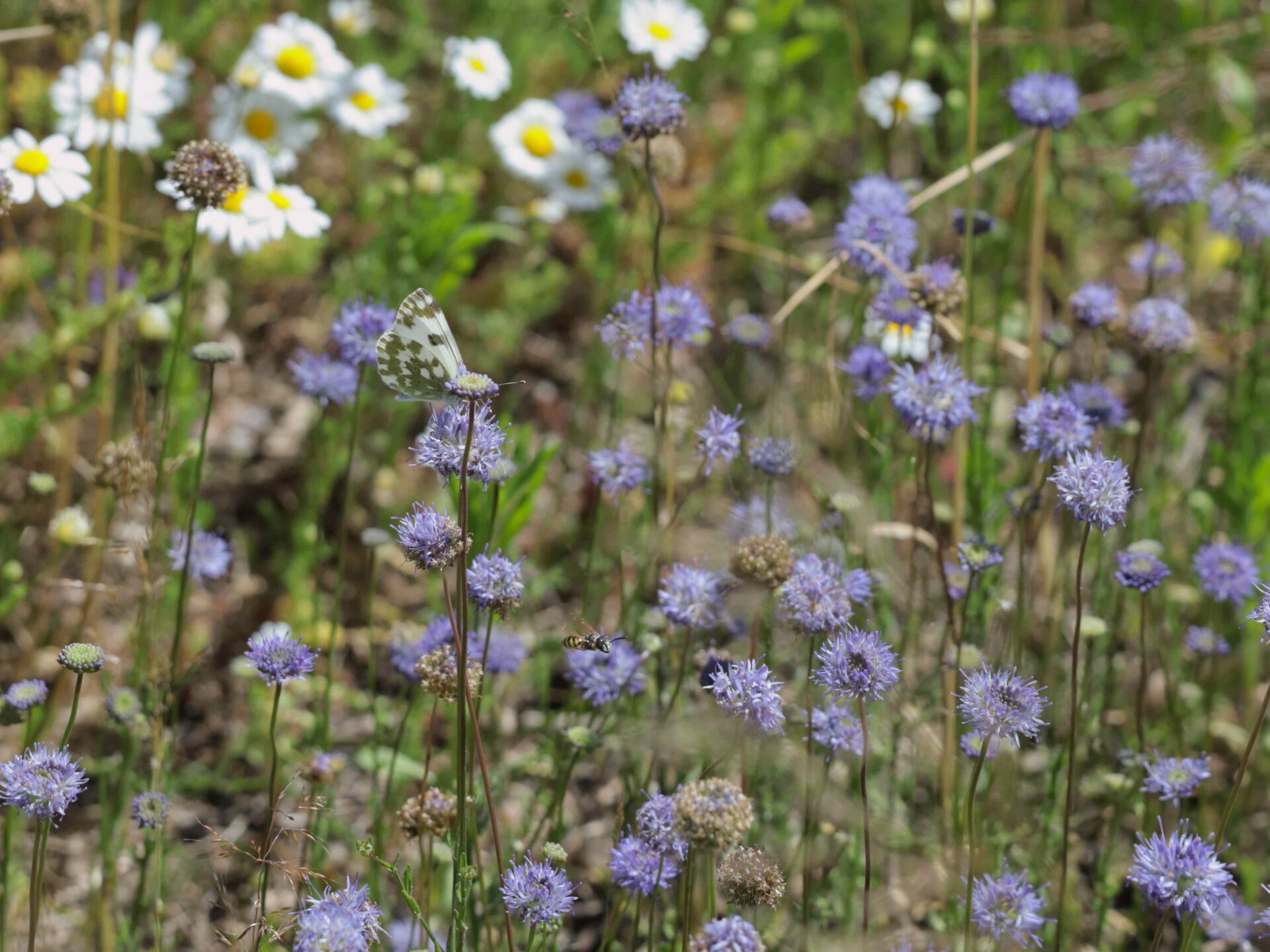
The special thing about the vegetation in the Solar park is that the diversity of species, for example, compared to a classic monoculture, results in a longer flowering period and therefore these plants can be used by more pollinating insects. In total 385 plant species in the individual solar parks.
Another finding from the study is that the Species composition of the plants per plant differs enormously. The maximum agreement is around 50 per cent for two plants that are only a few kilometres apart. The plant investigations were carried out almost exclusively by the biologist leading the study, Dr Tim Peschel. He specialises in botany. In order to record the plant species, he walked through prominent locations in the study areas and noted down all the species he could recognise and identify.
Birds
For birds, especially those of the Open landIt is still often assumed that they would avoid solar parks or only colonise them sporadically. In addition, they are standard in planning processes and all species are relevant in special species conservation.
As in many previous studies, our study was able to prove the opposite. In total 32 bird species recorded, which breed in solar parks. 63 species were observed foraging. The surveys were carried out in at least four inspections using the standard method according to Südbeck et al. (2005). Bird surveys were carried out in 26 sites. Particularly positive results were obtained with regard to Skylark recorded. This is by far the most common bird to breed in solar parks.
It is remarkable that more and more species are recognising the systems as a habitat. The yellowhammer, for example, breeds within ground-mounted PV systems. Such developments are likely to increase in the future due to learning effects.
Locusts
Grasshoppers can build up large populations in a short time. They represent a Important source of protein for various species represent. The study showed that this species group can build up mass populations shortly after the construction of a solar park. Grasshoppers generally live in sunny, dry areas. However, species for which this is not the case were also identified in the study. One example would be the Forest cricket, which was found in the darker and more humid areas under the modules. In total 30 locust species have been detected. This corresponds to around 36 per cent of all species found in Germany. The studies on grasshoppers were generally carried out by study author Rolf Peschel.
Butterfly
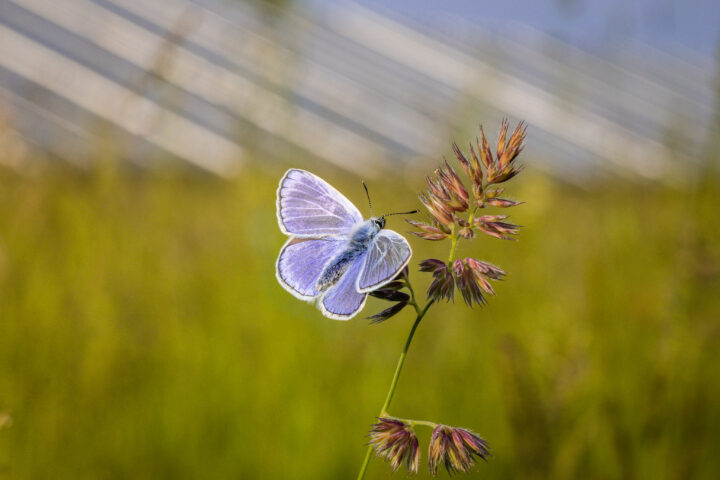
Butterflies are Insects visiting flowerswhose diversity can provide information on the abundance of flowers. Some species, for example, are also tied to the presence of certain flowers. By recording the plant species, it is therefore possible to check whether the solar park in question could be a larval habitat.
Butterflies were primarily examined by visual observation with binoculars while roaming the site. In individual cases, eggs and larvae were searched for, e.g. in the case of the mourning cloak. In total 36 butterfly species were detected during our investigations. Although only one endangered species was found, "common species" are also steadily declining in their populations. The common meadow bird and the small cabbage white butterfly were found in all 18 plants surveyed.
Bats
All species of bats are subject to special species protection in Germany. Various recent publications assume that solar parks would adversely affect them (Barré et al. 2023, Szabadi et al. 2023, Tinsley et al. 2023).
In our investigations, we were once again able to show the opposite: Bats actively fly to solar parks and find a good food supply there. In total 13 species can be clearly identified by their calls. That is more than half of the species occurring in Germany. The study also addresses the aforementioned critical studies and explains the discrepancy in the results. Bats were recorded using ultrasonic detectors in two regular inspections.
Amphibians
Amphibians were also searched for in the sites where aquatic species were present. This was done by visual observation on land and water. Of 21 species living in Germany eight species in solar parks. Among them are also Specialised pioneer species like the Alpine newt, the yellow-bellied toad or the natterjack toad. The attractiveness of solar parks for amphibians is due on the one hand to the improvement in water quality resulting from the absence of fertilisers and pesticides, and on the other hand to the abundant food supply. The studies show: In principle, most of our native amphibians can live in PVA.
Reptiles
Reptiles are known to Large stocks in ground-mounted PV systems can build up. Some species are also relevant in terms of special species protection. The reptiles were recorded by visual observation in at least four inspections. A total of three types found: Slow worm, common lizard and sand lizard.
Due to the available food supply, the cover and the small-scale differences in thermal conditions, solar parks can lead to Spring habitats, especially for sand lizards become. At sites where no reptiles lived before, it is rather unlikely that any will colonise after plant construction. Installations in the middle of fields have often been investigated. It would therefore be conceivable to introduce reptiles into the facilities so that they can breed there.
Dragonflies
The study specifically searched for dragonflies at three locations: Georgsdorf (Lower Saxony), Klein Rheide (Schleswig-Holstein) and Salmtal (Rhineland-Palatinate). They were recorded in several inspections by visual observation with and without binoculars. In the three sites mentioned 13 species living in the plants have been detected. That is 16.5 per cent of the 79 species native to Germany. The spearhead damselfly is a special find. A mass population of this specialised species was recorded at the Georgsdorf solar park, which is located on a former peat cut in Lower Saxony. Spear damselflies are threatened with extinction in Lower Saxony. The Georgsdorf solar park can therefore act as a source habitat for the species.
Other types
During their inspections, all biologists were also required to record other species observed. These were usually mammals. Brown hares in particular were sometimes sighted in large numbers during very many inspections of solar parks. But field mice, deer and foxes also occur in solar parks.
 English (UK)
  Deutsch