

3000 pages of data on biodiversity in over 30 solar parks
If you want to view the entire content of our nationwide field study on biodiversity in solar parks into a Large Language Model (LLM) in order to fully utilise its immense added value for daily practice? It's now easy. The bundling of the just under 3,000 pagesconsisting of the main work of the study, dozens of expert opinions, fact sheets and reports enables quick and precise analyses. In this way Argumentation aids in authorisation procedures simplified or realistic contributions to biodiversity in solar parks are written.
In addition, we have all 164 Documents of the study in a ZIP file summarised for easy download.
The problem: Poor data costs a lot of money and harms nature conservation
According to the Federal Nature Conservation Act (§13-15, §44), the construction of a ground-mounted PV system must take into account the impact on the ecosystem and the Compensate for the impact on protected species. However, there is a lack of data on the impact of solar parks on flora and fauna in order to make well-founded decisions on appropriate compensation. The responsible lower nature conservation authorities are therefore often forced to make a more generous compensation than necessary to demand. These are difficult costs for a project planner to predict.
Our study "Biodiversity in solar parks - a nationwide field study" can be a real help in this situation.
Our study results in brief
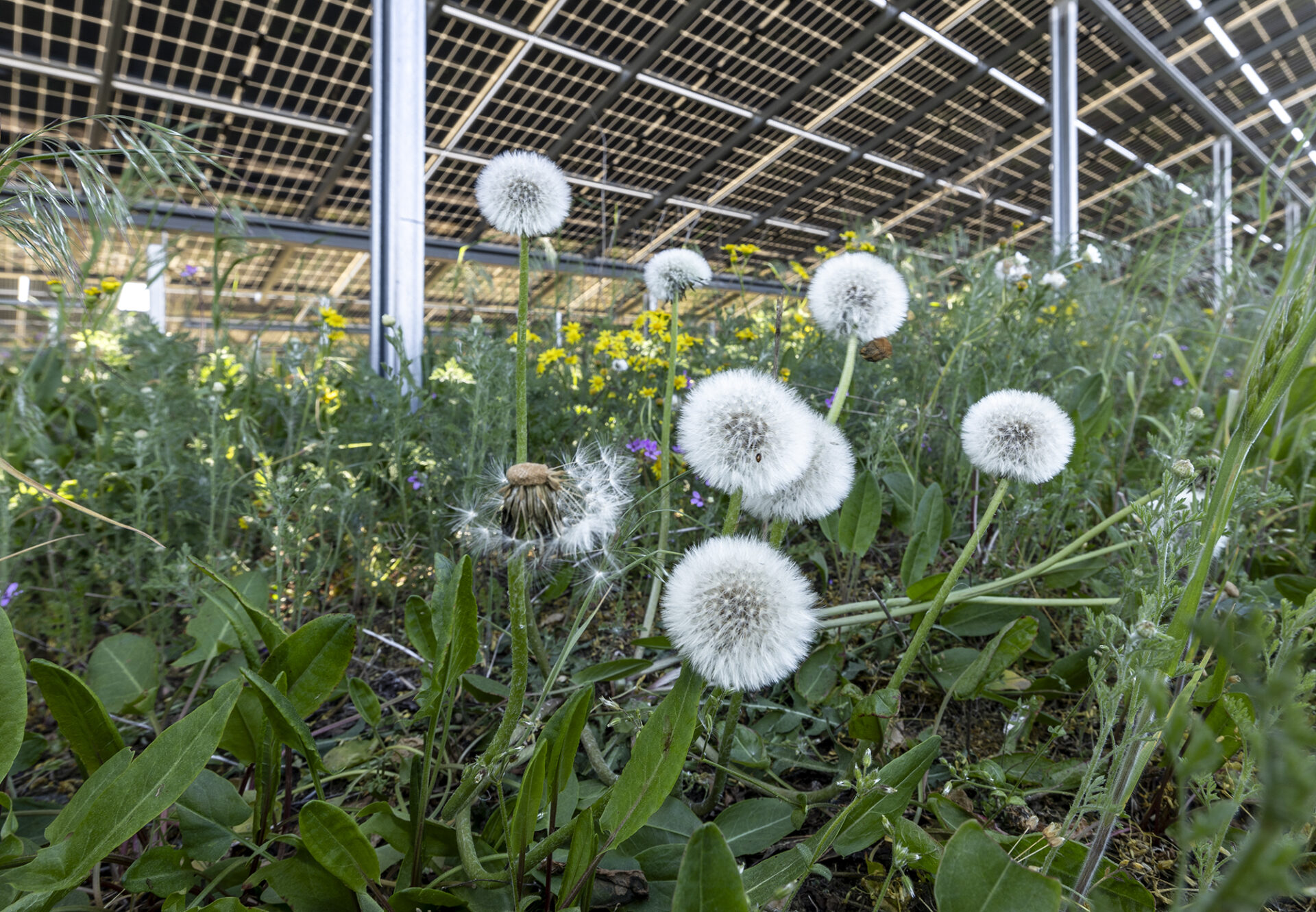
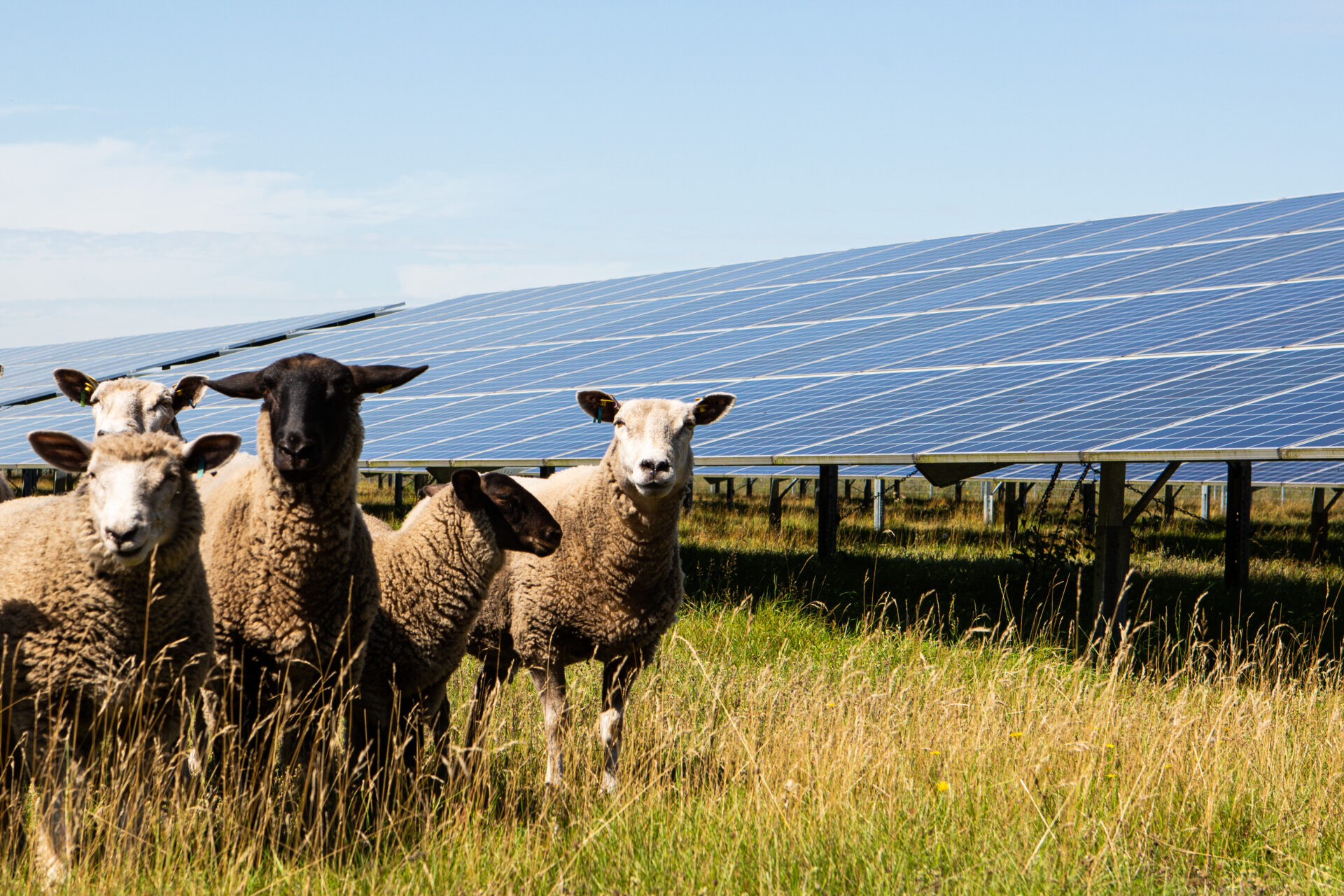
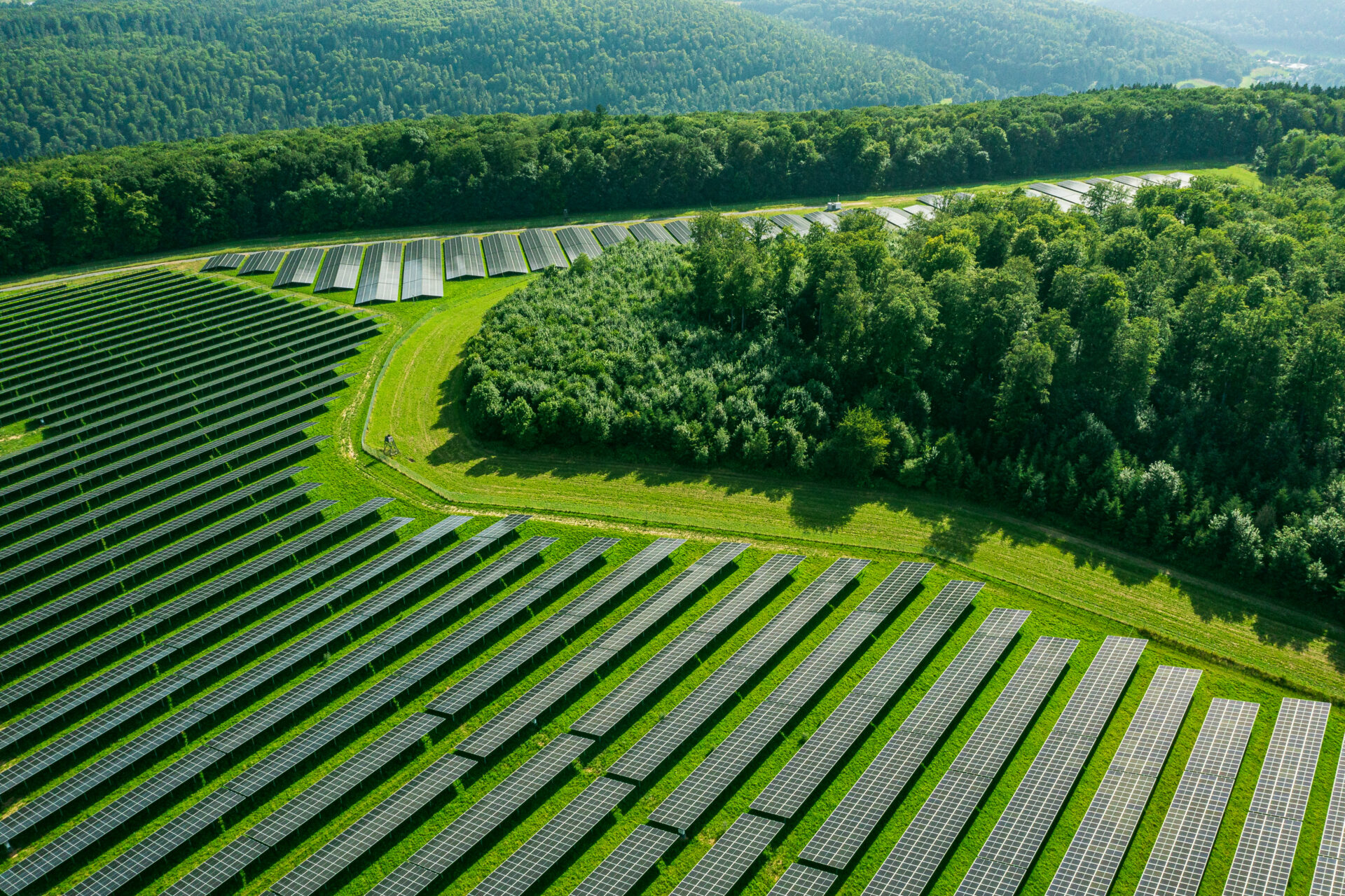
With the publication in March of the Study we were able to show that Solar parks not only produce electricity can but also biodiversity. The study focussed on Ground-mounted PV systems on agricultural land. Almost the entire expansion is currently taking place here. Our results in figures:
- 385 plant species
- 13 dragonfly species
- 30 locust species
- 36 butterfly species
- 8 amphibian species
- 3 reptile species
- 13 Bat species
- 32 Bird species (territories in the complex) & 64 species as foraging guests
This range of species far exceeds the level of diversity found on intensively utilised agricultural land and thus represents a Significant improvement with regard to the initial condition represent.
The solution: The treasure trove of data from our study becomes tangible
The study has now been published for six months and has been recognised by both the energy sector and nature conservation organisations, as was recently demonstrated at the Conference of the Competence Centre for Nature Conservation and the energy transition in several lectures and panel discussions.
With "Biodiversity in solar parks - a nationwide field study", we have developed a Data treasure trove createdthat wants to be raised. In addition to the study itself over 100 individual examinations and many other analyses that have been gathering dust in a drawer until now. profiles available for the individual systems.
With a new 3000-page PDF and one ZIP file with 164 documents we provide project planners, nature conservationists and scientists with the appropriate equipment to recover this treasure trove of data. The PDF thus enables fast and Precise analyses with the help of large language models (LLM). The ZIP file saves 164 individual downloads.
Strengthening arguments with AI
We hire Practical tool to provide the best possible data to support assumptions in the nature conservation approval process.
With extensive material, a evidence-based foundation provided often high requirements in the approval process. to argue objectively. It is often assumed that solar parks have a negative effect, which leads to demands for compensation measures that, as our study shows, are often not necessary.
The comprehensive wealth of data from the bne study puts project planners in a position to do so, Distinguish proven knowledge from assumptions and assertions. The use of an LLM to process these 3000 pages ensures that the well-founded facts immediately available in every discussion are.


 English (UK)
  Deutsch