

Lottorf solar park
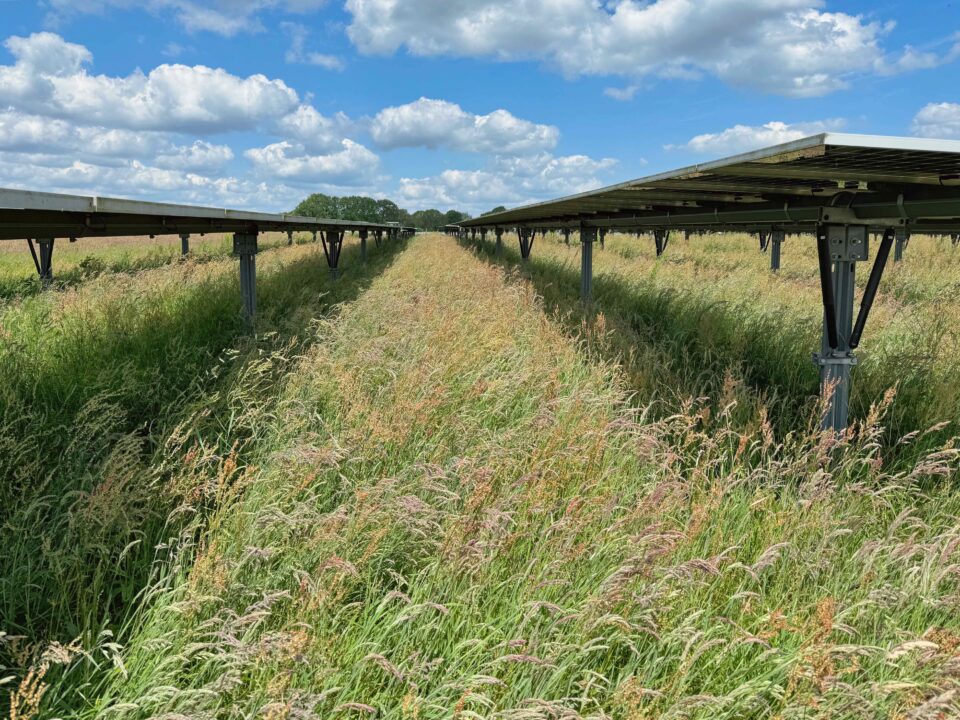
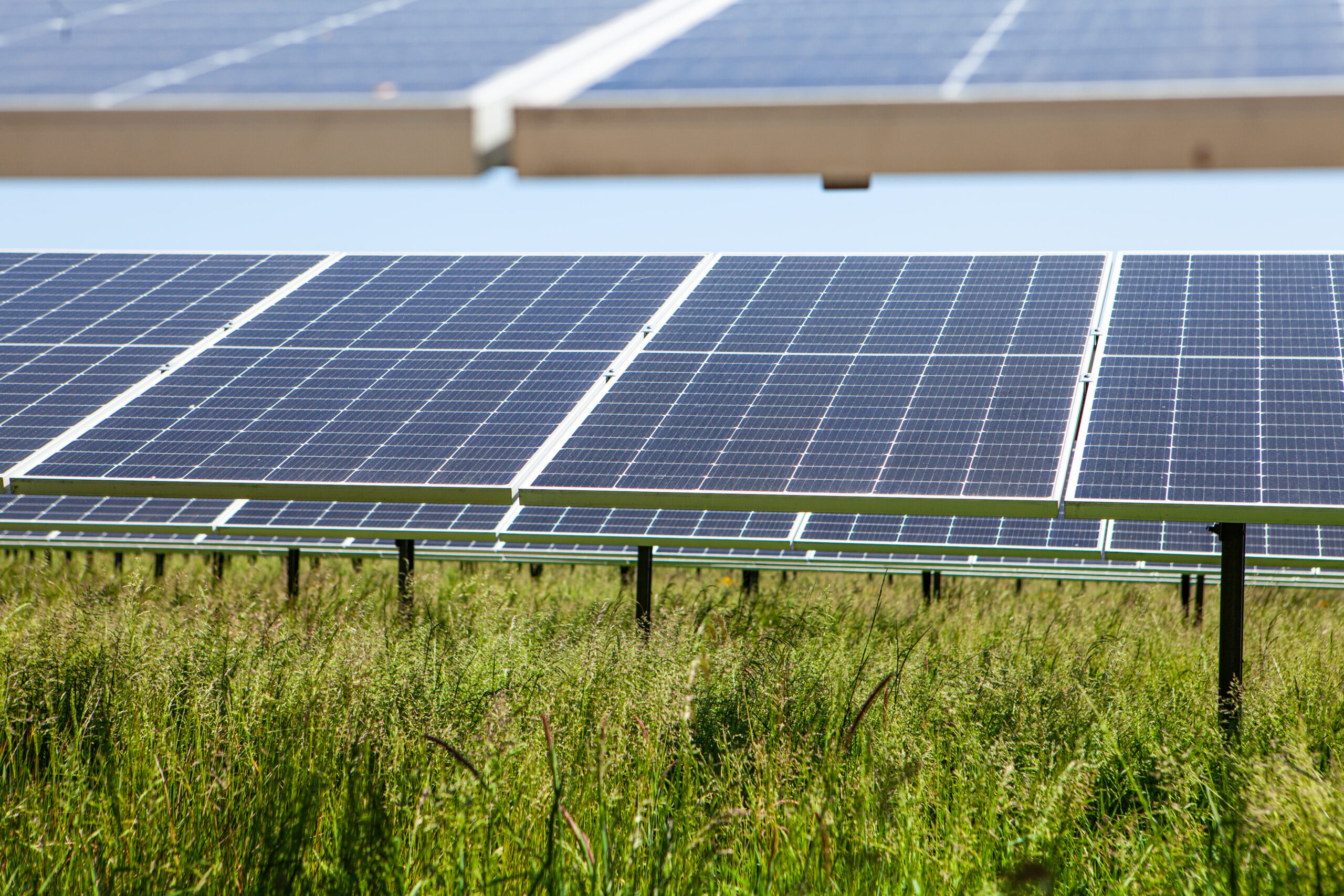
The Lottorf solar park was commissioned by Wattmanufactur in 2023 and extends over 30 hectares south of the town of the same name in Schleswig-Holstein, directly on the Flensburg-Hamburg railway line. It is Germany's largest rewetted and tracked solar park.
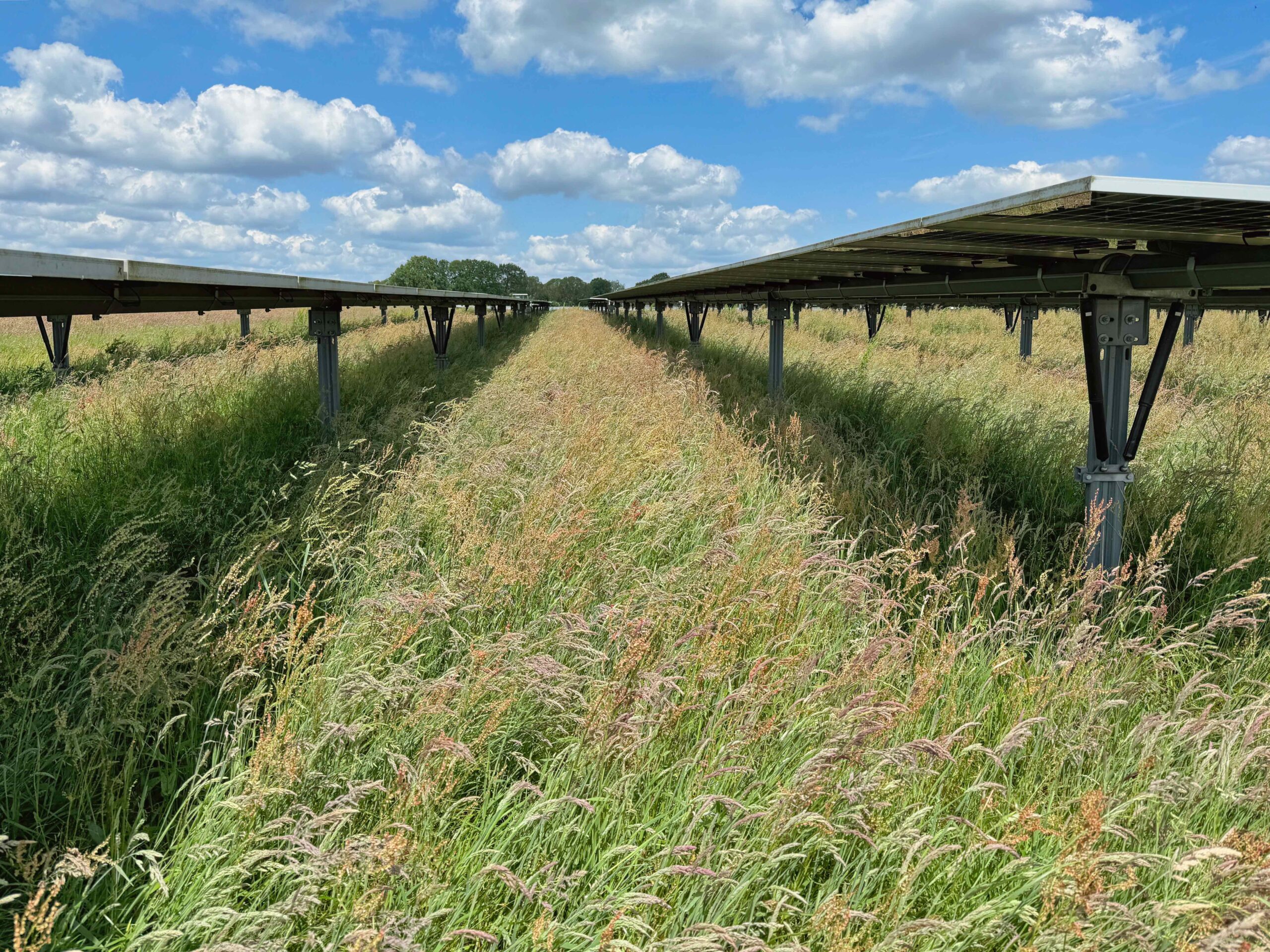
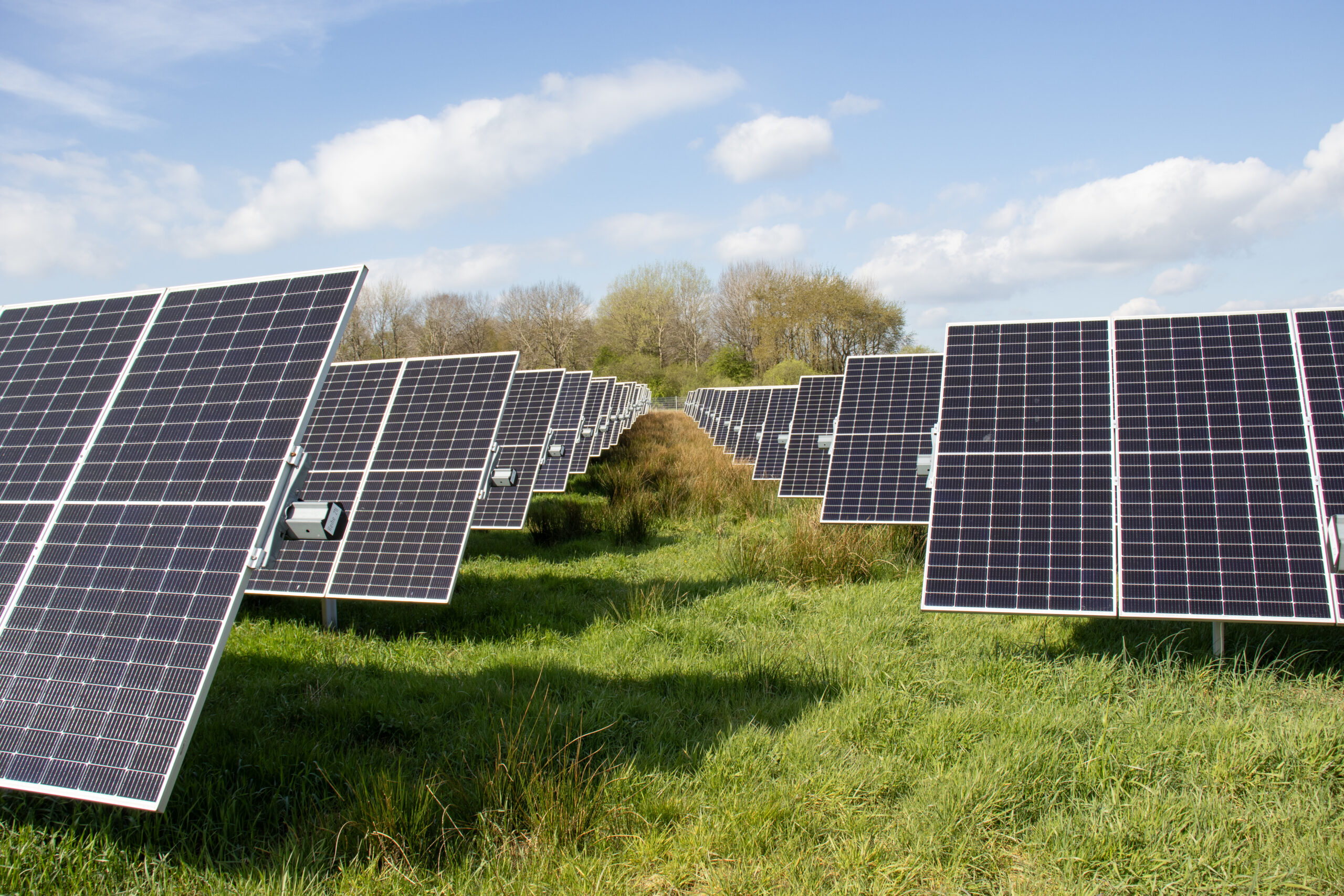
Thanks to the single-axis tracking modules, the module position adapts to the position of the sun, which optimises the energy yields.
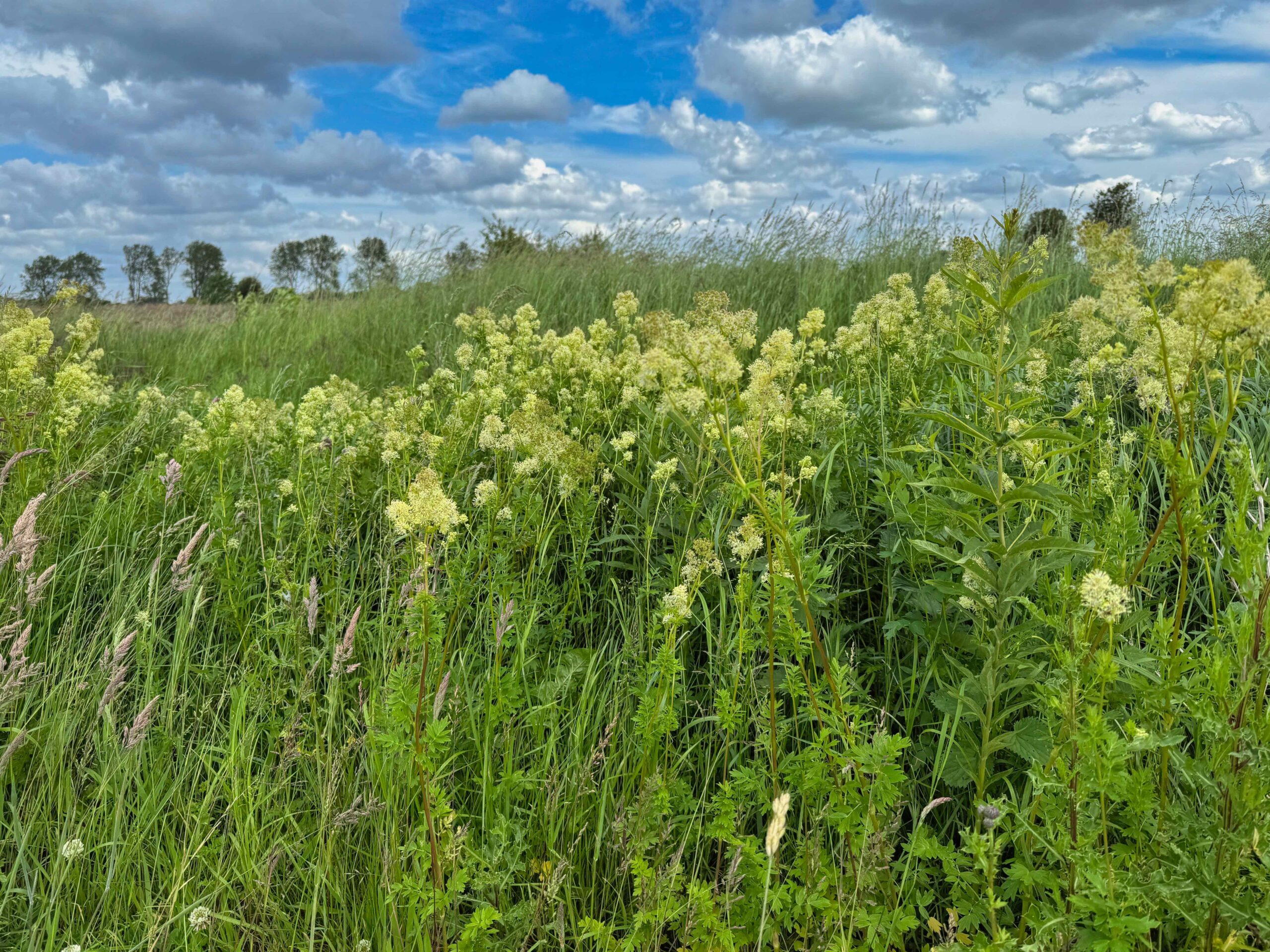
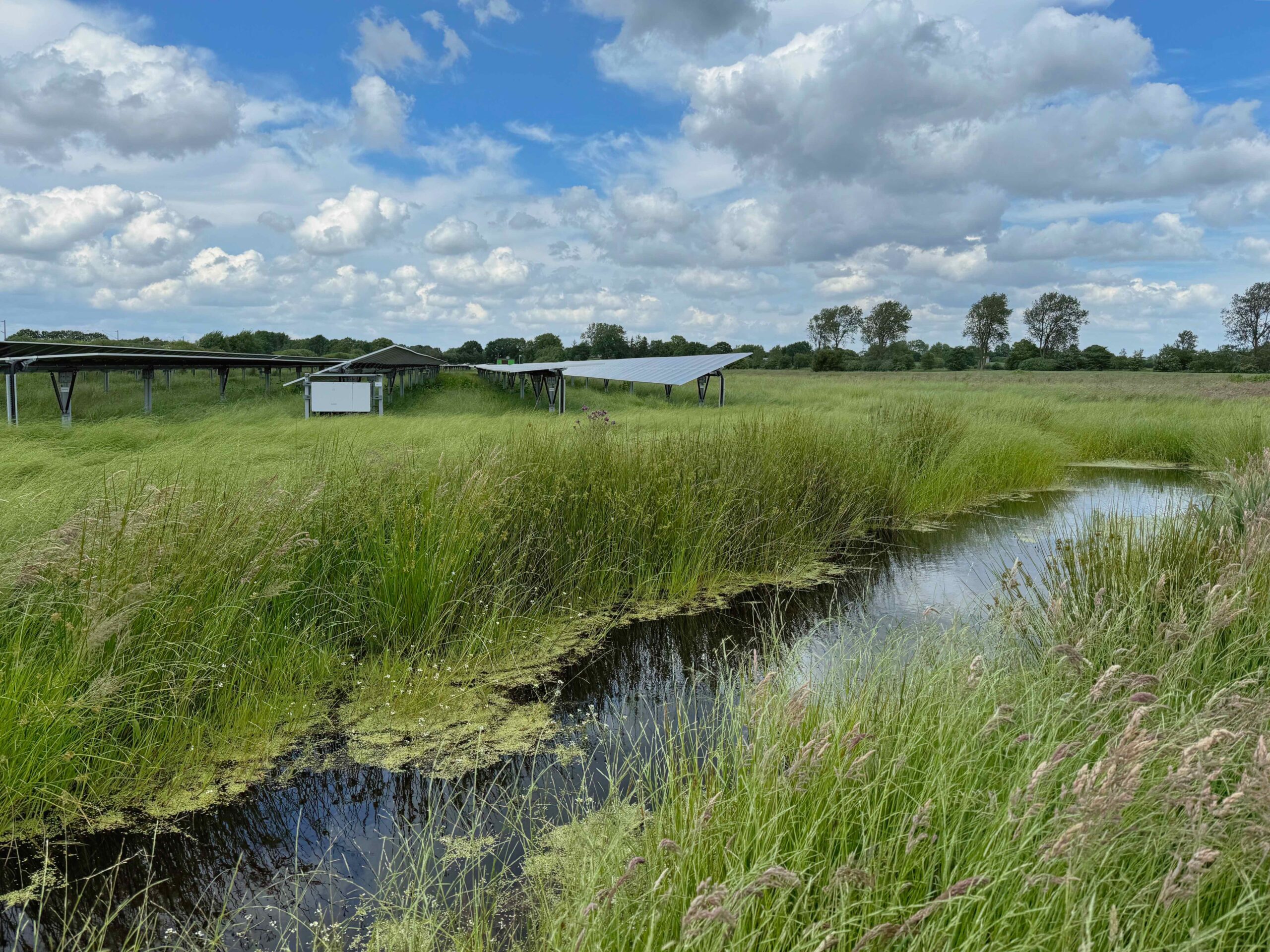
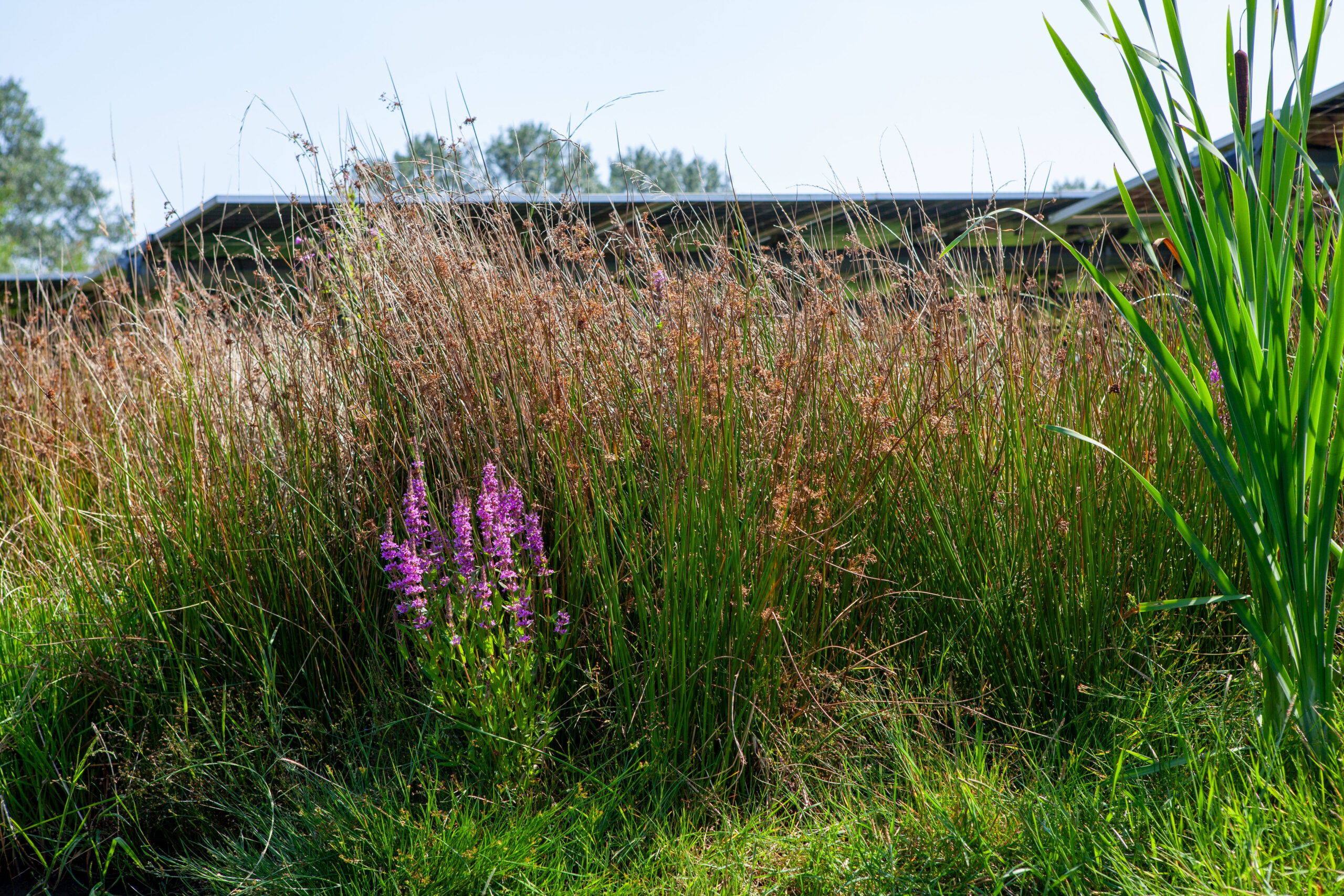
The rewetting of the area has revitalised a moor that represents a valuable habitat for specialised species.
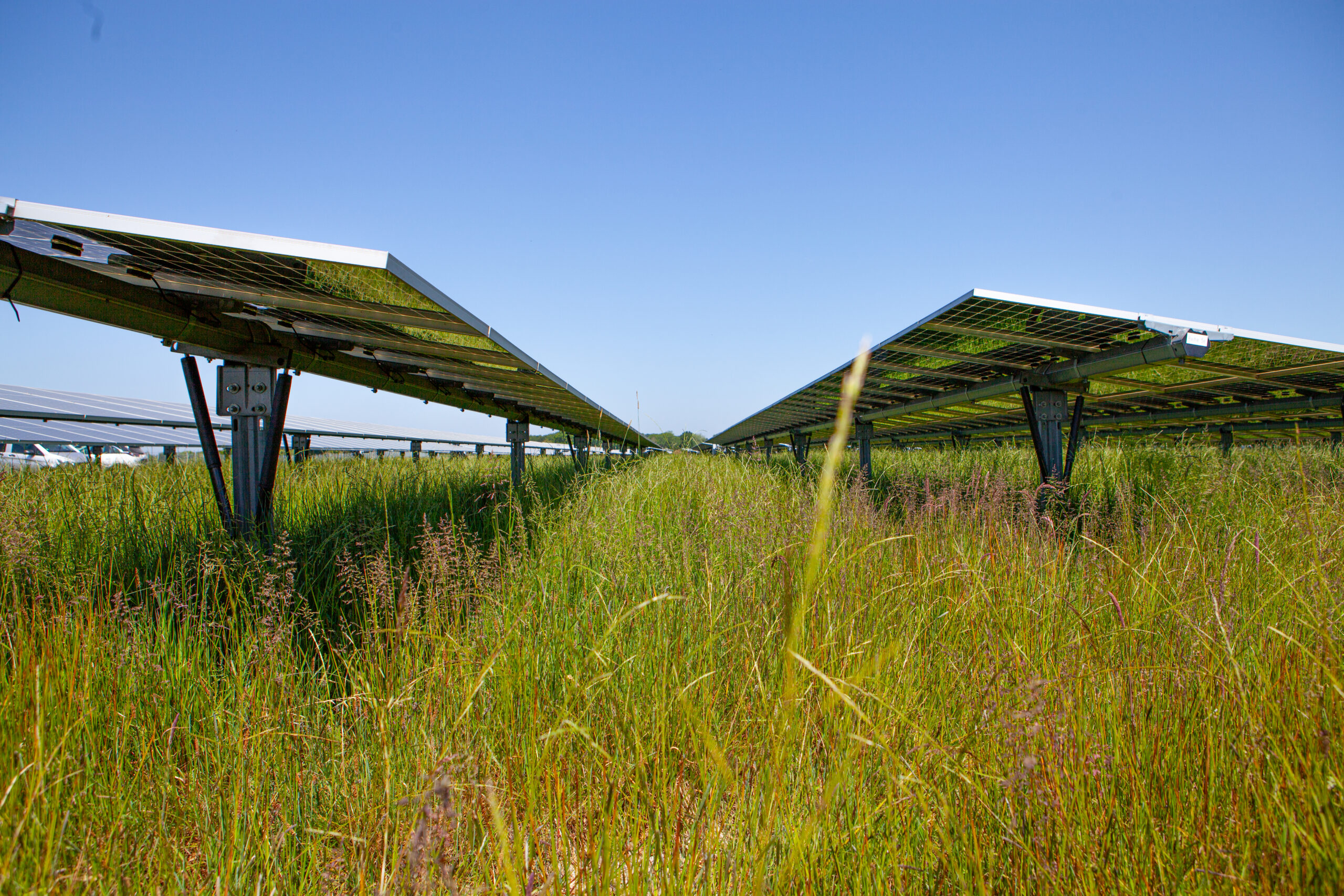
Without concrete foundations for fences, racks, paths and transformers, the degree of sealing is less than one per cent. This means that the area remains a habitat in the long term and can be used as grassland again after utilisation.
The extensive cultivation of the Lottorf solar park follows the principles of organic farming. The absence of fertilisers and pesticides ensures natural regeneration of the area. Late mowing times and the use of double-blade bar mowing technology protect insects and ground-nesting birds.
You can find more information about the Lottorf solar park here:
wattmanufactur.de/moor-pv.html
Wattmanufactur GmbH & Co. KG
16.9 MW
30 ha
2021
Schleswig-Holstein
54.4398282657 - 9.56882873353
Grassland
Table of contents
| Species groups | Investigated |
|---|---|
| Plants | ✔ |
| Locusts | ✔ |
| Butterfly | |
| Dragonflies | |
| Reptiles | |
| Amphibians | |
| Birds | ✔ |
| Bats | |
| Miscellaneous |
✔ = Investigation carried out on behalf of the operators
Natural environment and special features
Schleswig-Holstein Geest
The Lottorf solar park is surrounded by fields. Only at the southern end of the facility is a small, approximately two-hectare piece of woodland and a section of grassland characterised by moorland adjacent to it. A country road borders the northern side of the site. Smaller trees and bushes separate the solar park from the railway line running through it.
The Lottorf solar park is located at around 18 metres above sea level, but drops by 3 metres towards the south. This difference means that the lower moor is located in the south, while it is not present in the north.
Mainly grassland biotopes of various types, as well as water bodies and hedges. A biotope map is available in the download section of this profile.
Floor
Largest area in the south of the site: fenland soil; smaller area in the north of the site: brown earth-podzol / podzol-brown earth from dry, nutrient-poor sands
Largest area in the south of the site: bogs; smaller area in the north of the site: clay sands
Construction method
0.65
4.3m
1 piece
This is a tracking frame that tilts the modules in line with the movement of the sun.
Polycrystalline, bifacial modules are installed in the Lottorf solar park.
The paths consist of a gravel base layer (0-45 mm) and filling sand (0-5 mm).
There is an undermining protection for the fence in the northern section. There is no longer any in the southern section.
Management
Mowing is carried out once a year using sheep and double-blade technology. As there was a lot of rainfall in 2024, the mowing work was not completed until September. Certain areas of the site are not accessible by vehicle due to its location in a moor. No mowing is carried out here. Otherwise, woodland work is still being carried out in areas where wood is growing
Equalisation measures
The following measures were implemented as part of the development plan:
Extensive grasslandNo mandatory seeding necessary, succession permitted, autochthonous, flower-rich seed mixtures must be used when seeding, reseeding of predominantly economic grasses is not permitted
MowingExtensive mowing permitted, leaving mown material (compressed bales) lying around and the creation of silage pits and fodder heaps are not permitted, the protection of meadow breeders must be ensured, mechanical maintenance measures must be completed in the 1st decade of September, extensive sheep grazing permitted, max. 0.5 LU/ha.
Implementation period: Single-cut mowing is planned from 15 July at the earliest, the aim is to create a mosaic of areas mowed earlier and later, alternating annually, wet grassland areas should be mowed earlier (e.g. at the beginning of June) and with a further cut in summer
Lighthouse projectOne sub-area with mowing without removal of mowed material with subsequent grazing, other sub-area with mowing with removal of mowed material
CareMaintenance ploughing, rolling and harrowing are not permitted
Sealing the drainage pipe systeme: Sealing the drainage pipe systems immediately after completion of the respective PVA sections
Implementation period: Implementation of the measure and effects will be evaluated in the first, third and fifth year after construction of the plant and agreed with the lower nature conservation authority.
Contribution to peat development
Vegetation developmentMinimum area determination and recording according to Braun-Blanquet at sites still to be defined: two sites below a solar module (one each in the northern and southern area), one site in the area surrounded by the predator fence (north-west), one site in the area not surrounded by the predator fence (south-east).
Implementation period: In the first, third and fifth year after car park completion
Creation of skylark mounds
Underground-proof fence
These measures were implemented voluntarily:
Flower stripsSowing of site-appropriate flowering mixture
Mire protectionAdapted management and measures to prevent desiccation
The measures were implemented after completion of the respective construction phase.


Further documents
Development plan
Lottorf solar park development planSurvey report 2023 (breeding birds and plants)
Survey report 2023 (breeding birds and plants) Lottorf solar parkBiotope mapping
Biotope mapping Lottorf solar parkEnvironmental construction supervision - concept of measures
Environmental construction supervision - concept for measures at Lottorf solar park
 English (UK)
  Deutsch