

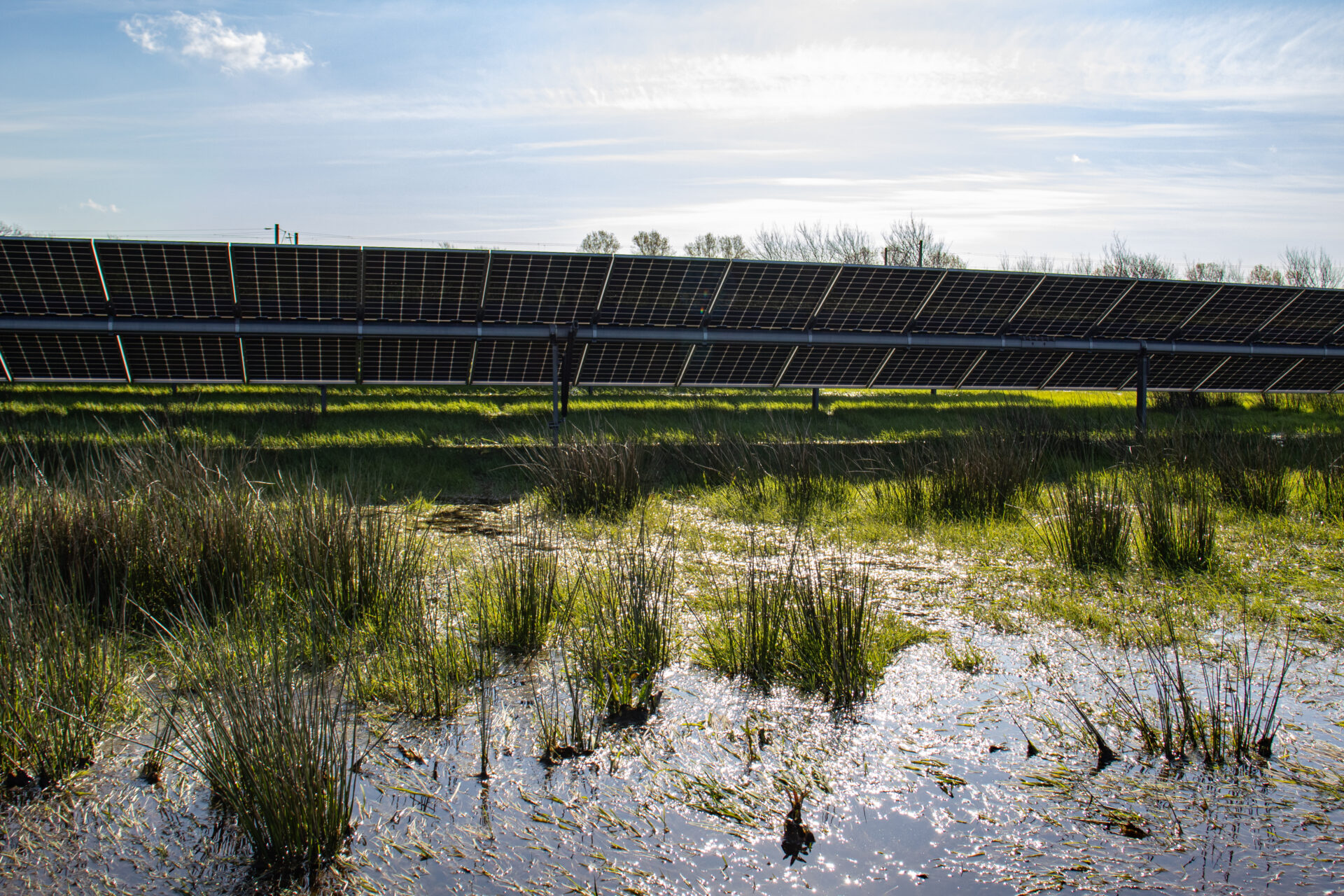
SonneSammlen regularly receives enquiries about bog-based solar PV. With this article, we aim to provide a Providing context and also a Discuss the proposal, such as Do bog-based PV projects have a future under the EEG 2027? might have. This is because the planned abolition (according to the draft bill) of the sub-segment for specialised solar installations makes it unlikely that moorland PV projects will be financially viable. Such installations would not receive any price premiums when in direct competition with solar parks. Furthermore, the scope for bids in the PV tender is also unlikely to be sufficient. The cap on the maximum permissible bid price was already reached in the last open-space PV tender, even before the EEG 2027, which will make all installations more expensive. The proposed changes would, in all likelihood, spell the economic end for moorland PV before it could even begin to take off. A However, support for moorland solar power is legitimate. We therefore need different approaches to address the specific challenges relating to construction, the rewetting of the land and project funding to be tackled by Moor-PV.
The promotion of peatland PV is, first and foremost, a climate protection measure
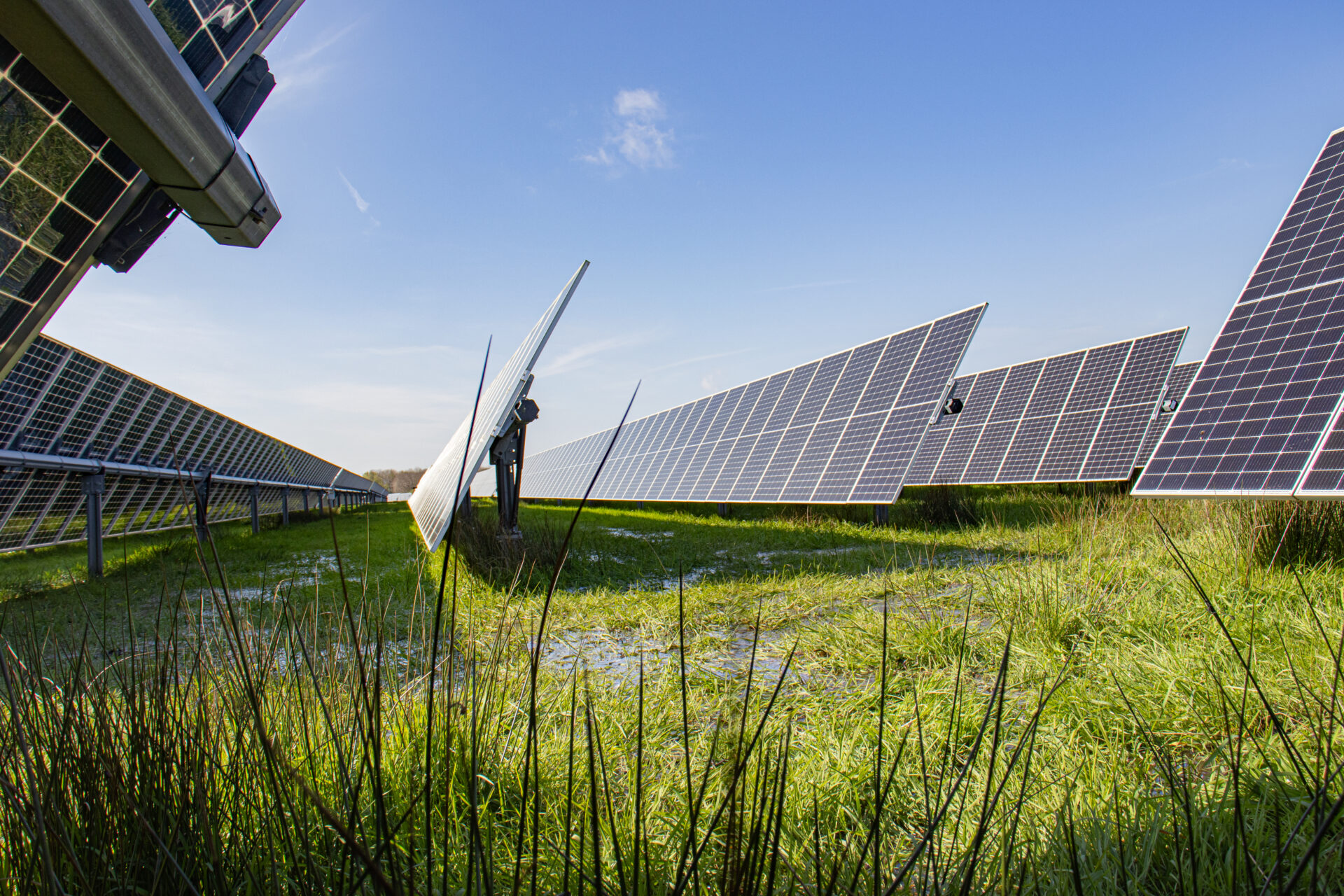
Drained peat soils are among the most significant Sources of greenhouse gases in agriculture. To achieve greenhouse gas neutrality in Germany, solutions must be found for the rewetting of drained peatlands that are currently used for agricultural purposes. Moor-PV could be one such solution. The revenue generated from solar power production provides a crucial source of income for landowners economic incentive, to rewet these areas. At the same time, green electricity generated. As land in moorland solar farms must also be managed extensively, there are further Synergies in the field of biodiversity. However, this linkage primarily provides enormous leverage for the national carbon footprint. However, this environmental rationale only holds true if investment actually takes place. Overly complex rules, unclear guidelines and rigid deadlines (in the EEG), combined with the now dwindling prospect of funding, are deterring project developers, who are otherwise switching to simpler ground-mounted PV installations or PPA projects.
For bog-based PV to make the leap out of the niche of research projects, the EEG support framework needs to be designed in a way that is practical and conducive to investment. And new approaches are needed:
1. New approach under the EEG: Put moorland PV projects out to tender in Segment 2
A key obstacle is the current classification of bog-based PV under Segment 1 (conventional ground-mounted installations), which means that all the rules and deadlines applicable to standard solar parks apply. Peatland PV is not cost-competitive with standard ground-mounted installations, and the permitted maximum bid limits are insufficient for viable projects. The draft EEG 2027 even threatens to lead to the complete loss of moorland PV by removing the sub-segment for special solar installations. An effective strategy is therefore proposed, Put bog-based PV projects out to tender under Segment 2 of the EEG (now: large rooftop installations). This would not only improve the chances of being awarded a contract, but would also bring significant further benefits for bog-based PV due to the tendering principle in the second segment of the EEG.
- Project logic rather than rigid deadlines: Segment 2 operates on the basis of a project-based approach and a Project security deposit as a kind of „deposit“ for a contract awarded. This creates incentives for swift implementation, whilst avoiding rigid 24-month commissioning deadlines, which are generally not compatible with the complex rewetting process required for peatland solar PV plants.
- Decoupling the EEG deadlines from rewetting: The project security deposit will only be repaid in full once the rewetting has been confirmed by an expert.
- Ensure an adequate market premium: The higher maximum bid price in Segment 2 (currently around 10 ct/kWh) offsets the higher construction costs of peatland PV. As this is a tender process, the funding is also not subject to scrutiny under the EU Guidelines on State Aid for Climate, Environment and Energy (KUEBLL). For bog-based PV, a preferential award process (e.g. prioritising the first five bog-based PV bids per tender) could also competitively secure adequate award prices. Bog-based PV would thus become more economically attractive for plant operators and project developers as well.
- Practical testing of the Moor PV system: The EEG is structured in such a way that the relevant electricity system operator is responsible for verifying whether a plant is being constructed in accordance with its EEG subsidy entitlements. Consequently, in the case of bog PV, the system operator would also have to verify the rewetting reports. There are neither the necessary powers nor the processes in place for this. A tender process for peatland PV in Segment 2 could address this more effectively. It could be stipulated that the assessment of the start and implementation of rewetting for the projects be supported by specialist institutions (such as research institutes), as grid operators are unsuitable for carrying out this environmental assessment. The commencement of rewetting should trigger the release of the project security deposit.
2. Ensuring legal certainty and planning certainty
Project developers need reliable definitions in order to minimise planning and legal uncertainties:
- Clarity regarding „permanent rewetting“: The period for permanent rewetting should be set at 25 years from the date of commissioning should be specified in order to safeguard contractual terms. Technical defects (such as cracks in waterproofing membranes) should not result in the loss of entitlement to funding if they are rectified within 24 months.
- Cut-off date rule for peat soils: The peatland characteristic must at the time of commissioning be established in a legally sound manner. Subsequent amendments to regulations (e.g. the CAP Cross-Compliance Regulation) must not retrospectively jeopardise existing payment entitlements.
- Practical construction processes: Re-wetting (aim: to raise the summer water level to at least 30 cm below ground level) must according to may only take place after the solar panels have been installed, as the areas must remain accessible to heavy machinery during the construction phase.
3. Enable scalability and safeguard the remuneration structure
- No cap at 20 MW: The 20 MW cap on bids should be lifted. Large-scale projects (e.g. 100 MW) benefit from economies of scale, improve cost-effectiveness and reduce the burden on planning consultancies, local authorities and grid operators compared with fragmented sub-projects.
- Dealing with CfDs (Contracts for Difference): The introduction of bilateral contracts for difference is required under European law and will therefore be implemented under the EEG 2027. Moor-PV would not be able to compete economically with conventional solar parks, which is why a separate tender process in segment two is recommended. The higher award values would trigger a later activation of the CfD for bog-based PV, which is comparatively more expensive. As single-axis tracking systems are particularly well-suited to bog-based PV, this would result in installations with high market value factors, which may also be attractive to investors.
A summary of the approach is available for download via the button below:
Conclusion: Moorland PV requires more creative approaches
Moor-PV combines climate protection with renewable energy – provided that the support schemes under the EEG are simple, unambiguous and economically attractive. The draft EEG 2027 will mean that, apart from research projects, no further moorland PV installations will be built, as such projects would be unfeasible to finance. More creative approaches are needed: The Inclusion in the tender for Segment 2 of the EEG and practical verification rules are the key to The immense potential for CO₂ savings offered by drained peatlands in Germany to lift.

 English (UK)
 Deutsch