

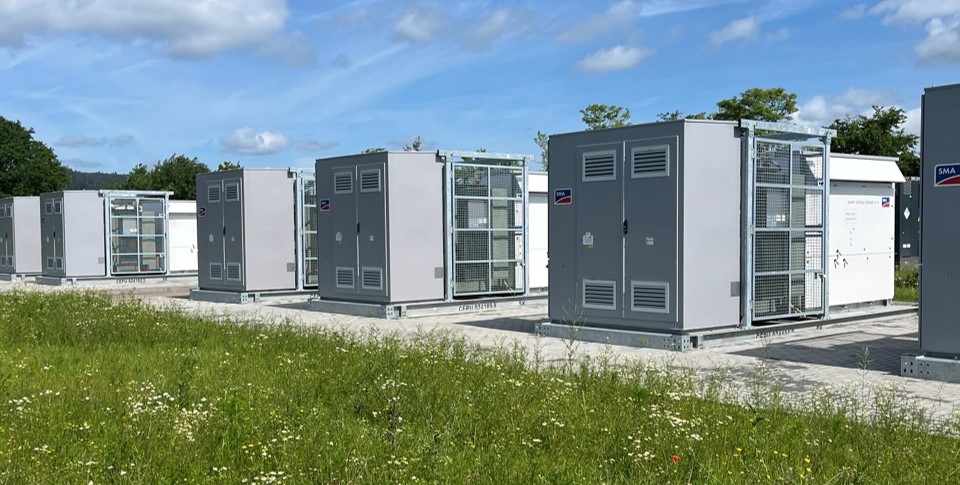
In the first part in our series on grid-connected inverters we have explained why this technology is important for the The electricity system of the future is essential is. Unlike conventional grid-following inverters, grid-forming inverters can themselves SSet the voltage and frequency and therefore core system services to take over the role previously fulfilled mainly by conventional power stations.
But How far has the technology come today? Really? Are grid-connected inverters already ready for the market? Where do they come from? to be used in future and which Challenges What implications does this have for network operators, manufacturers and the regulatory framework? The second part of our series addresses precisely these questions. It shows why the real challenge no longer lies in the technical feasibility lies not in this, but in grid-forming inverters to integrate it comprehensively into the electricity system – and why the right political and regulatory decisions will determine how quickly this change takes place.
Where are grid-connected inverters used?
The „System Stability Roadmap“The BMWE’s proposal provides that in future, Power converter-based systems must contribute to grid stability. The roadmap sets out plans for grid-forming inverters no blanket, immediate obligation, but provides a phased introduction sets out the Technical Connection Regulations (TAR), which broken down by network levels will be implemented. This roll-out plan follows a „top-down“ approach: the requirement, set out in the relevant minimum standards, will initially apply to high- and extra-high-voltage systems (targeted for 2026), and will subsequently extended to medium voltage by 2029 and is also set to be rolled out to the low-voltage sector (mass market) by 2033. Overall, the mandatory technical requirements (TAR) for grid-forming power converters are set to come into force between 2027 and 2030, meaning that this technology will gradually become mandatory across all voltage levels
The roadmap also sets out Tests designed to identify potential problems (particularly in the distribution networks) at an early stage. Work is currently underway government-funded research projects and pilot plants. For example, in the case of Fraunhofer ISE Institute in the The „SUREVIVE“ project“ investigated the interaction and stability of NBWRs in the distribution network under real-world conditions. Roland Singer from the ISE research team explains why he considers grid-forming inverters to be a key technology:
Grid-connected inverters with sufficient power and energy reserves are capable of maintaining grid stability even without conventional power stations. When used in battery storage systems, this is a technology that is ready for the market.
Nevertheless, particularly when deployed in distribution networks, there is often still uncertainty regarding unintended interactions arising from the new technology. This uncertainty can be countered through practical experience and scientific monitoring, as well as detailed, standardised requirements.
At the same time, grid-forming inverters offer further opportunities for improving the quality of supply in distribution networks, for example through the local compensation of harmonics or the provision of local power supply in the event of a crisis.
The findings The findings from the research project are being incorporated into the Development and refinement of the Technical Connection Rules (TAR) and specifications in order to adapt this technology for a “Plug & Play”-compatible mass market to make them operational. By the end of the decade, testing will no longer be limited to individual pilot schemes in small network areas. The following are planned and required: large-scale field trials with an ever-increasing number of systems that up to the gigawatt range can be sufficient. Every grid-forming installation makes the electricity system more resilient.
How widely available are grid-forming inverters?
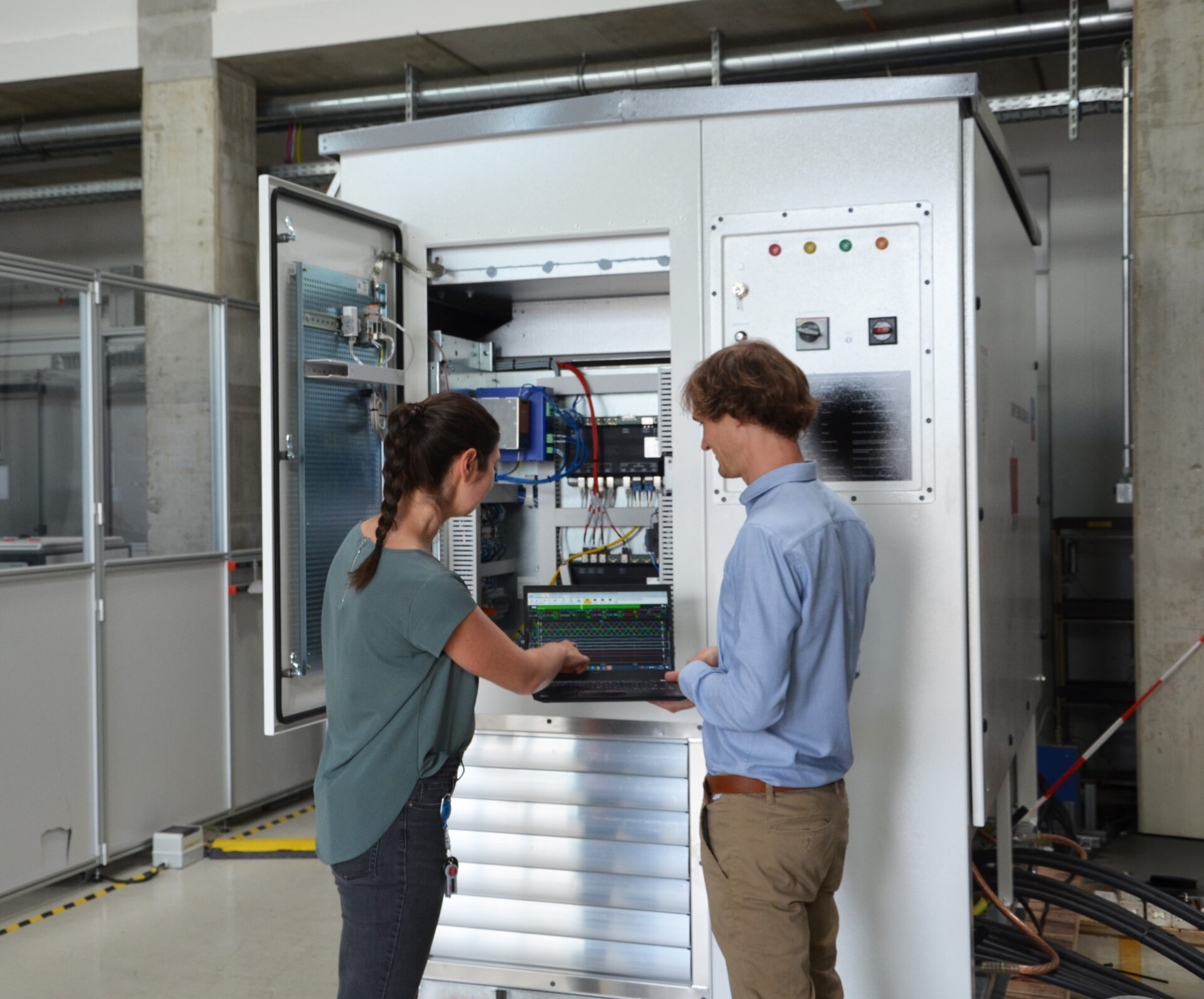
Grid-connected inverters are generally available today and have a high level of technological maturity achieved. According to estimates by various research institutions, the technology now generally ranges between Technology Readiness Level (TRL) 7 and 9 – that is, prototypes as well as qualified systems with proven operational capability in their intended field of application. Fraunhofer ISE is involved in the project „GFM Benchmark“concluded that even a There is a relevant range of market-ready devices available. Some are commercial products are already on the market available. Grid operators have also already successfully implemented grid-forming control procedures demonstrated under real-world operating conditions.
At the same time, they show Current research projects, that despite the technology being generally available cannot yet be regarded as fully developed. Laboratory and field tests show that solutions from different manufacturers can, in some cases, behave quite differently, particularly in complex network situations. Research by Fraunhofer ISE showed that, whilst comparable results are achieved under clearly defined conditions, there are significant differences under other operating conditions. This further implies that The need for standardisation, certification and practical testing.
The current focus of research is therefore less on its fundamental functionality and more on the large-scale and interoperable deployment in real-world electricity grids. Projects such as SUREVIVE or the planned Field trials in Fuchstal to investigate how grid-connected inverters interact with one another under real-world conditions, which The impact of high penetration rates on grid stability have and like a Restoring island grids following power cuts can take place. The aim is to, reliable operational experience to win support for future electricity systems with a high proportion of renewable energy.
Distribution network operators and the grid connection of grid-forming inverters
In particular Distribution network operator must rapidly gain experience at the Grid connection of grid-forming inverters collect. Preparations for the widespread deployment of grid-forming inverters should have begun by now. In the near future, this technology will have to take on key system services that have hitherto been provided by conventional power stations. These system services were often provided only rarely in the finer branches of the distribution network, e.g. at high and medium voltage levels. However, it is there that most solar parks are connected in co-location with battery storage systems – and these installations will play a key role in grid stabilisation. Therefore, new grid connection rules, Certification process and Operational strategies required, as well as practical processes (Upgrading grid connection portals, updating software in grid operators’ control centres, etc.). The challenge lies less in the availability of the technology than in its system-wide integration and scaling. Further develop the innovation call for proposals rather than scrapping it (specify grid-forming inverters)
According to the BMWE’s latest considerations on the EEG 2027 the Call for Innovation Proposals phase out. This would be the The loss of an important instrument and, in view of the need to introduce grid-forming inverters, rethought become. Modernising the call for innovation proposals would result in the Opportunity with them, to Strengthening system stability to be implemented. By specifying grid-forming inverters, the tender process would, in many real-world projects (not merely pilot projects) involving numerous grid operators, trigger the development of grid connection concepts for grid-forming inverters. This aspect alone justifies continuing the tender process.

Conclusion
Grid-connected inverters will become a a central role in Germany’s future electricity system play. Whilst traditionally conventional power stations which were responsible for frequency control, voltage stability and other system services; these functions can and must increasingly be taken over by power converter-based systems. Grid-forming inverters are a A key component of the BMWE’s „Roadmap for System Stability“. The technology has already made a high level of maturity has been achieved and is regarded as essential requirement for an electricity system with a very high proportion of renewable energy.
The the coming years will be crucial to be, in order to to gain practical experience, to establish technical standards and Grid operation concepts and, in particular, Mains connection concepts to develop further. The real challenge, therefore, no longer lies in technical feasibility, but in the system-wide integration. In this context, a further developed innovation tender under the EEG could serve as a means of encouraging many grid operators to integrate a large number of installations with grid-forming properties into the grids. Grid-forming inverters are therefore not merely a complement to the energy transition, but one of its key prerequisites for a stable, resilient and climate-neutral electricity system.

 English (UK)
  Deutsch