

The Energy transition takes place locally, and Germany's mayors are ready. A new one, comprehensive Survey of 609 municipalities shows: The interest in new energy projects is huge. Many of the participating municipalities are already implementing energy transition projects, as shown in Figure 1 below. But while the plans are maturing in the town halls, ambitions often come up against structural hurdles.

High level of acceptance for the local turnaround
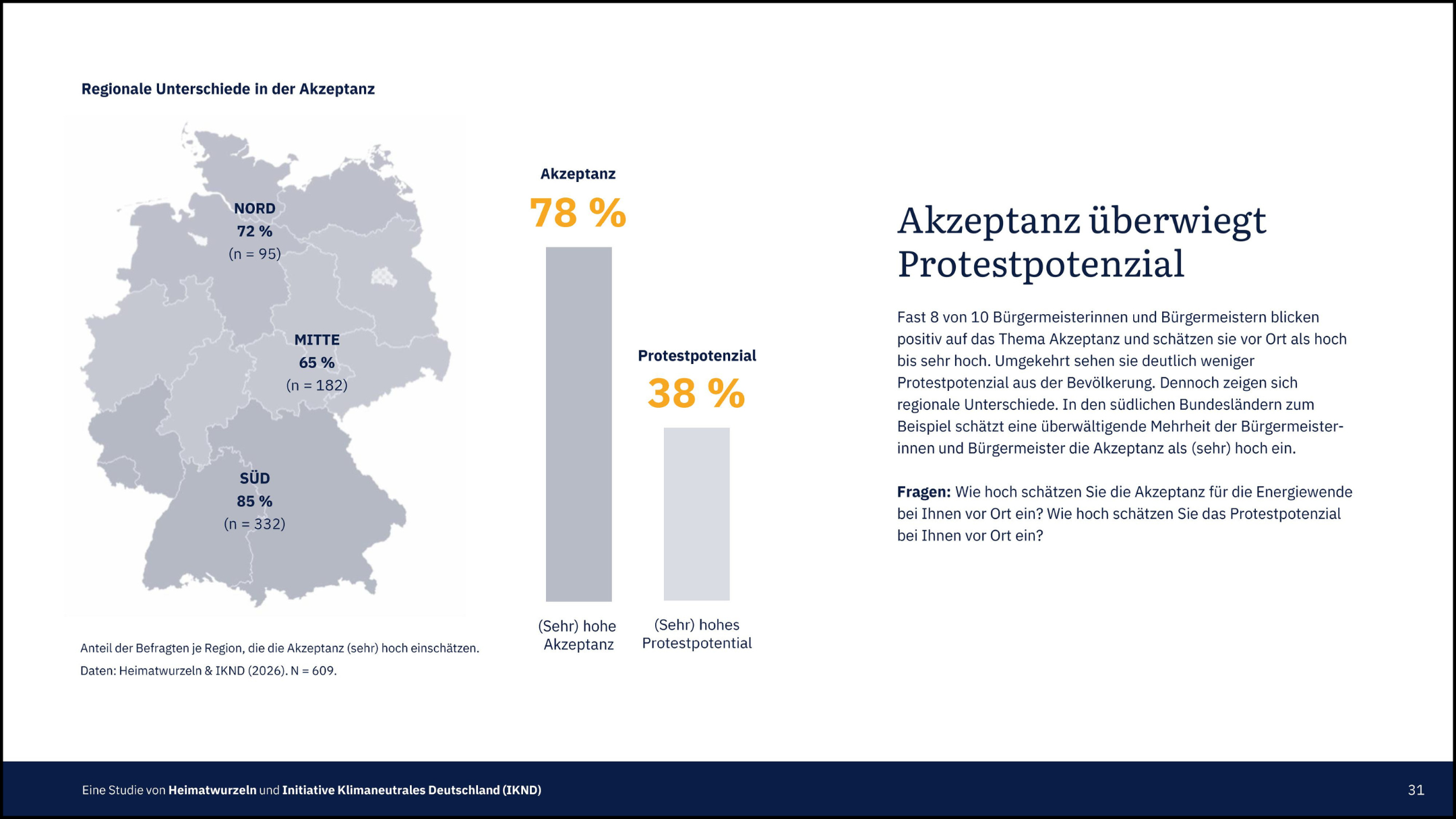
A key finding of the study dispels the prejudice of general rejection: Around 78 % of the town hall leaders surveyed rate the acceptance of the energy transition in their municipality as high or very high in. Especially in the At 85 %, approval is above average in the south of Germany (see chart 2).
What strengthens this support? The study names clear factors:
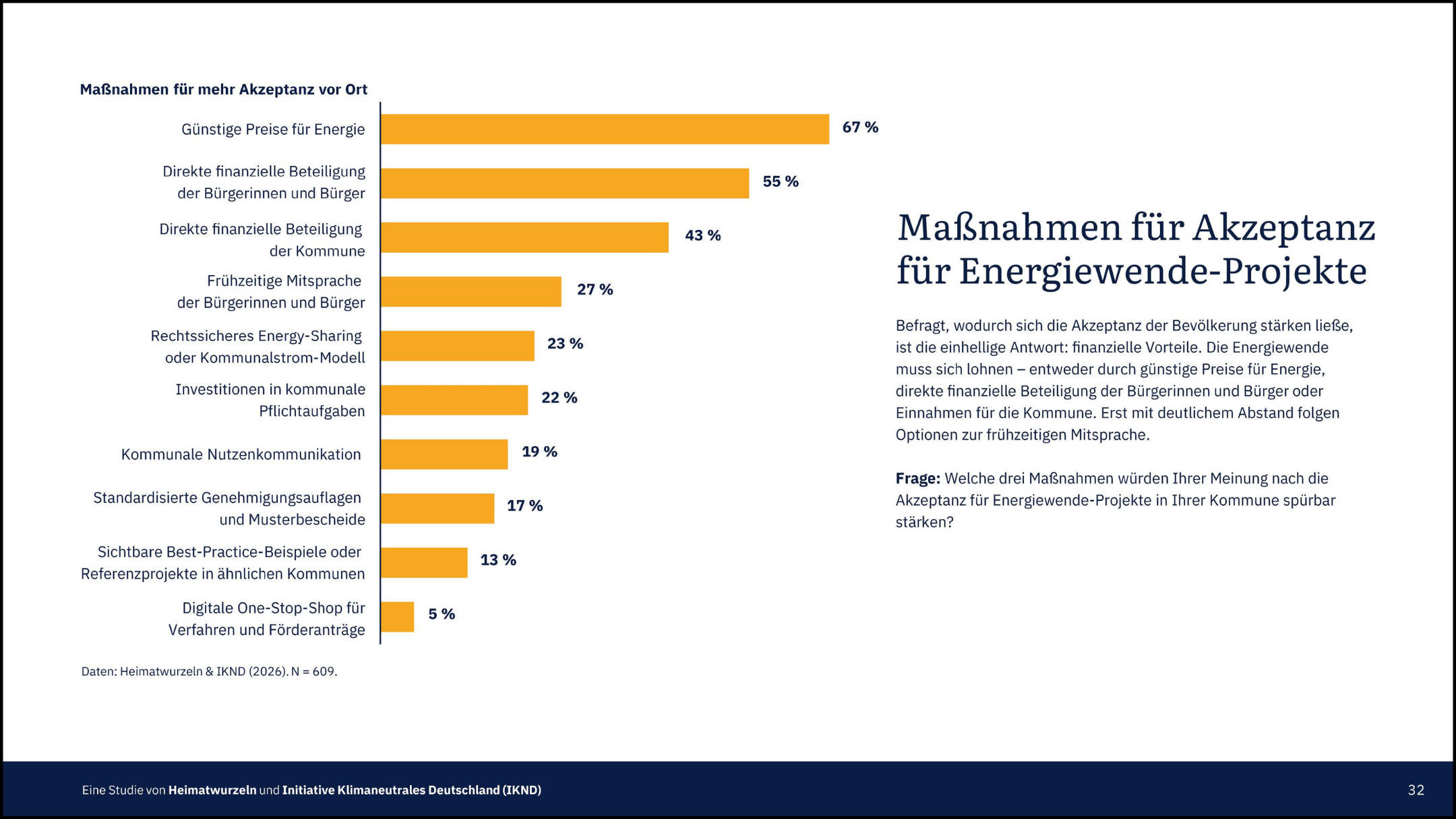
- Favourable energy prices: For 67 %, the main arguments are the reduction in the burden on citizens and cheaper electricity for local businesses.
- Financial participation: The direct involvement of the population (55 %) and the municipality itself (43 %) are decisive levers for social peace in the expansion (see Figure 3).
Communication as a critical factor
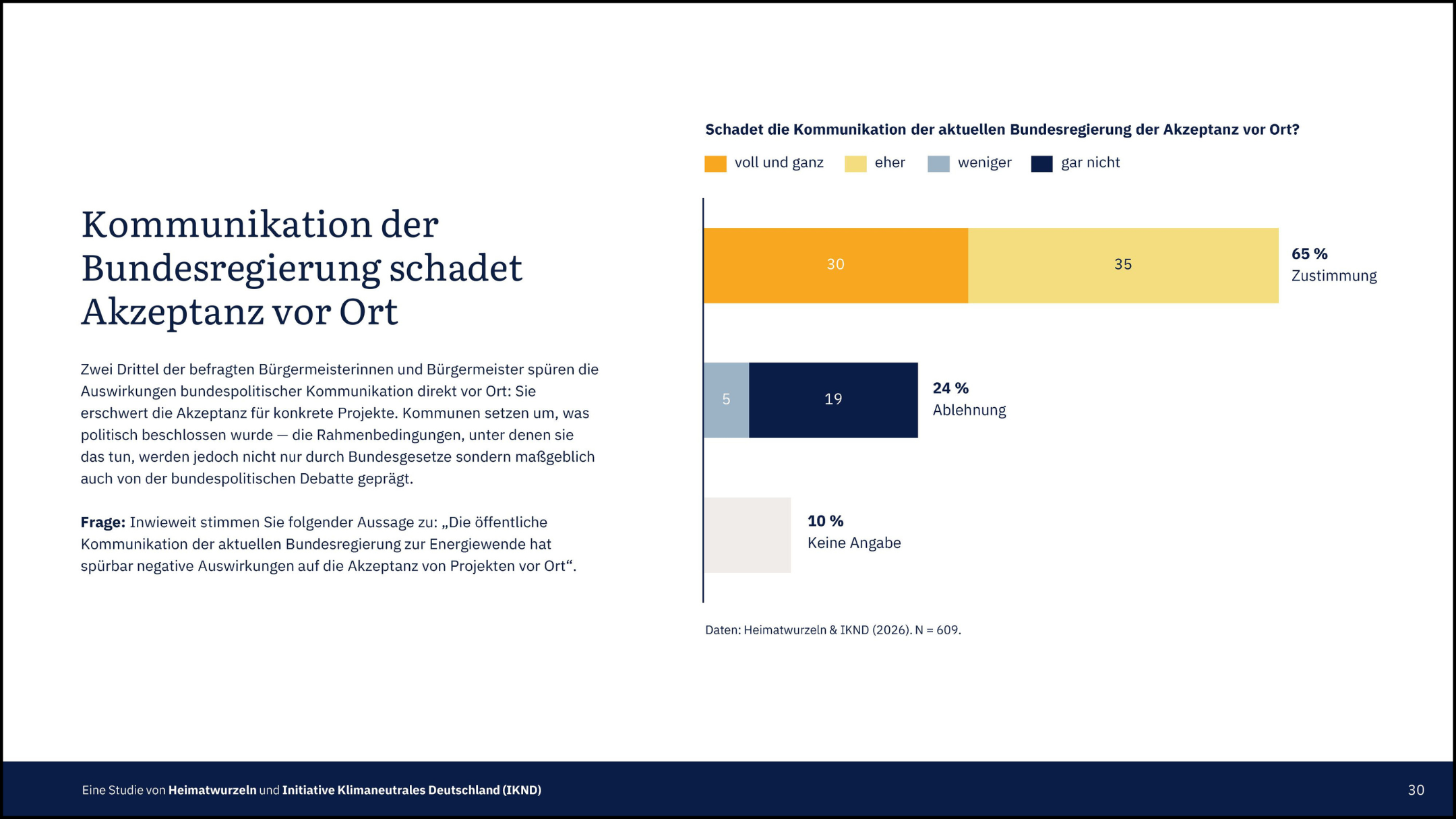
Interestingly, ztwo-thirds of respondents consider the federal government's current communication to be a burden on local acceptance. Energy transition projects are implemented in line with political decisions, but national political debates on renewable energies also have an influence on local acceptance. This is evident here, the importance of sound information and transparency - Topics that we also address in our fact papers deepen - e.g. to Battery storage, Power grids or Biodiversity in the solar park.
ConclusionThe Municipalities are not brakemen, but shapers. However, they demand More reliable framework conditions, especially with regard to funding and participation, as well as clear communication at federal level.
Background:
The Nationwide survey of more than 600 mayors was organised by the Initiative Climate Neutral Germany (IKND) and heimatwurzeln e.V. initiated. The result: the local energy transition rarely fails due to the will of those responsible - but rather due to a lack of grid capacity, a lack of money and complicated procedures. To mark the survey, we are publishing a series of blog posts on selected results on SonneSammeln.
Contributions to survey results of the Network connection topics and Municipal participation you can read in a timely manner on SonneSammeln.


 English (UK)
  Deutsch